
Flax dodder
Cuscuta planiflora Ten.
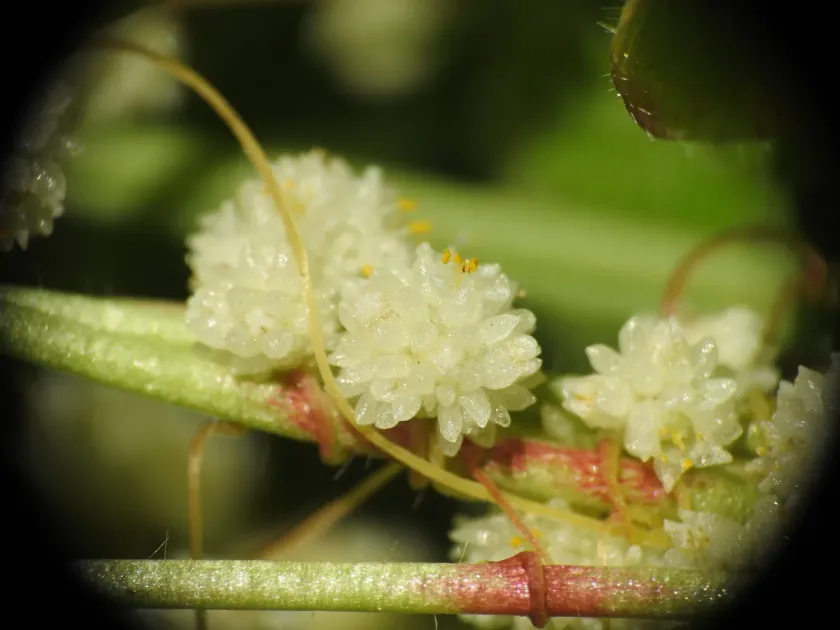
Description
Growing requirements
Flax dodder (Cuscuta planiflora Ten.) is a parasitic plant belonging to the Convolvulaceae family. It is a leafless, rootless annual plant that derives its nutrition from host plants by forming haustoria, which penetrate the tissues of the host and extract water and nutrients.
This species is widely distributed across various continents, thriving in temperate and warm climates. It is particularly problematic in alfalfa, clover, flax, and various vegetable fields, where it can cause significant damage to the physiological processes of the crops.
The morphology of this weed consists of thin, thread-like stems that vary in color from yellowish-white to orange. It attaches itself firmly to the host, forming tangled masses that prevent the host plant from growing properly and eventually leading to its decline.
It requires sunlight and warmth to germinate and grow effectively. The seeds of the dodder are extremely resilient, capable of surviving in the soil for many years until conditions are perfect, often coinciding with the rapid growth of the commercial crops nearby.
From an agricultural standpoint, flax dodder is considered a highly destructive pest rather than a crop. It causes crop failure, reduces seed quality, and necessitates quarantine measures to prevent its transmission between farms and regions.
Main diseases and pests
The primary threat is the longevity of the seeds in the soil. Because they can remain dormant for years, simply rotating crops for one season is rarely sufficient to clear the infestation from the field, requiring long-term land management.
Controlling the dodder requires strict seed certification and cleaning protocols. Farmers should ensure that their planting material is certified weed-free to prevent the initial introduction of this parasite into clean fields.
Mechanical control is effective in the early stages of infestation. Once detected, farmers should mow or pull up the infested plants and the surrounding host plants, ensuring they are burned or deeply buried to prevent the seeds from dispersing.
Integrated weed management also involves the use of specialized herbicides. Since dodder is a parasitic plant, chemical treatments must be carefully timed to target the parasite while minimizing physiological damage to the host crop in the field.
Maintaining field hygiene by keeping farm equipment clean is essential. Seeds of dodder can easily stick to machinery and be transported to different areas of the farm, thus spreading the infestation rapidly across clean ground.