
Field dodder
Cuscuta campestris Yunck.
Description
Growing requirements
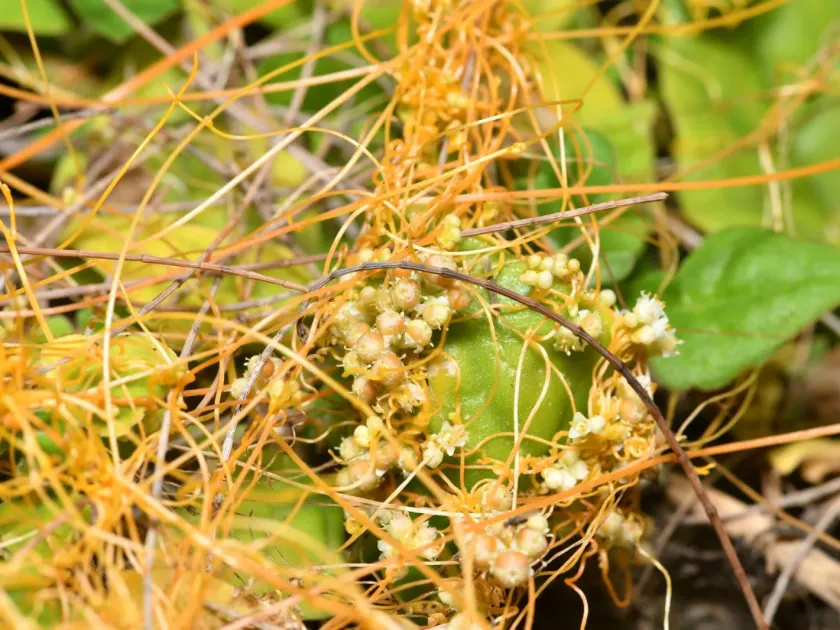
Field dodder (Cuscuta campestris Yunck.) is an obligate parasitic plant species belonging to the Convolvulaceae family. It is often recognized as a member of the Cuscutaceae family due to its unique biological characteristics.
This plant is a rootless and leafless parasite that relies entirely on host plants for survival. It develops thread-like stems that entwine the host, creating specialized structures called haustoria to penetrate and extract nutrients from the host tissues.
Native to North America, field dodder has spread globally and is currently considered a significant quarantine pest in many regions. It affects a wide range of agricultural crops, including vegetables, pulses, and forage plants.
The plant thrives under warm and humid conditions, which are ideal for its rapid growth and germination. Its seeds can remain dormant in the soil for years, waiting for suitable environmental conditions to sprout and infect a host.
Field dodder has no agricultural utility and is considered a strictly harmful weed. Infestations result in stunted growth of host plants, significant yield losses, and degraded quality of harvested commodities, rendering them unfit for sale.
Main diseases and pests
The primary damage caused by field dodder is the depletion of the host plant's vital resources. By diverting sugars, water, and minerals, the parasite significantly weakens the host, making it more susceptible to environmental stress and diseases.
Controlling this weed requires rigorous phytosanitary measures, primarily focusing on preventing the introduction of dodder seeds. Ensuring seed purity and using clean farm machinery is essential to limit the spread within and between fields.
Cultural control includes implementing diverse crop rotations that include species resistant to the parasite. Additionally, deep cultivation practices are employed to bury dodder seeds deep enough to prevent them from reaching the surface to germinate.
Manual removal of infected plant patches is recommended if the infestation is localized. It is crucial to collect and incinerate all infected plant material before the parasite produces flowers or viable seeds.
Chemical control is challenging but possible using herbicides targeting seedling stages or non-selective herbicides applied to severely infested spots. Integrated pest management programs are necessary to maintain long-term control of this resilient parasite.