
Australian dodder
Cuscuta australis R. Br.
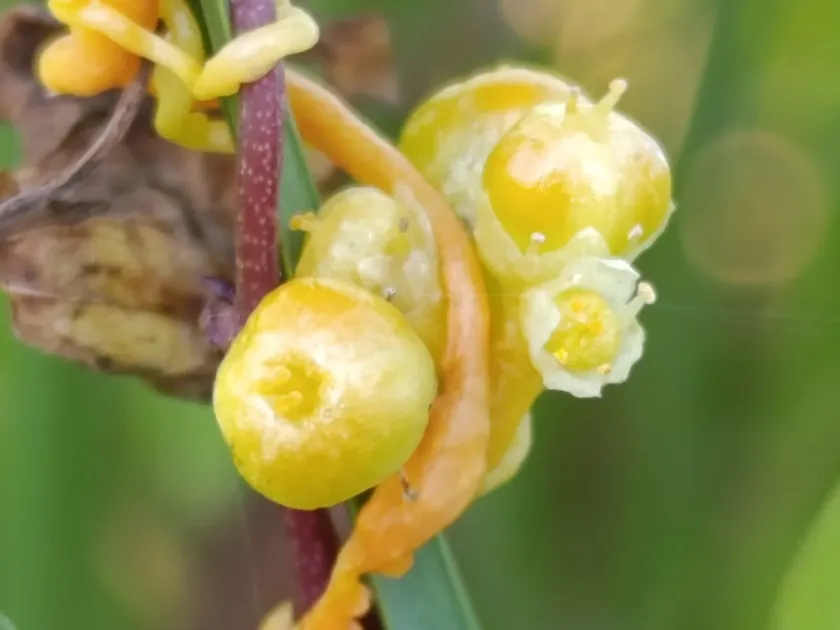
Description
Main diseases and pests
Australian dodder (Cuscuta australis R. Br.) is a destructive parasitic plant belonging to the Convolvulaceae family. It is strictly classified as a quarantine weed rather than a crop, as it derives all its nutrients from host plants through specialized structures called haustoria.
The biological cycle of this plant involves twining around the stems of host plants and piercing their vascular tissues. This process redirects essential nutrients, water, and carbohydrates from the host to the parasite, leading to significant yield losses in agricultural fields.
The geographical origin of this species is associated with Australia, but it has expanded its range across Asia and parts of Europe. It is particularly problematic in warm climates where it easily infests leguminous crops, vegetables, and ornamental plants.
The survival strategy of Cuscuta australis is highly efficient, relying on the production of numerous resilient seeds that persist in the soil for long periods. These seeds are frequently spread during harvest and transport, making it a critical threat to international trade.
Effective management requires integrated pest control strategies, including the use of certified seed, strict weed monitoring, and immediate destruction of infested plant patches. Chemical control is limited, as the parasite shares the same biological host as the crops it targets.