
Flax dodder
Cuscuta epilinum Weihe
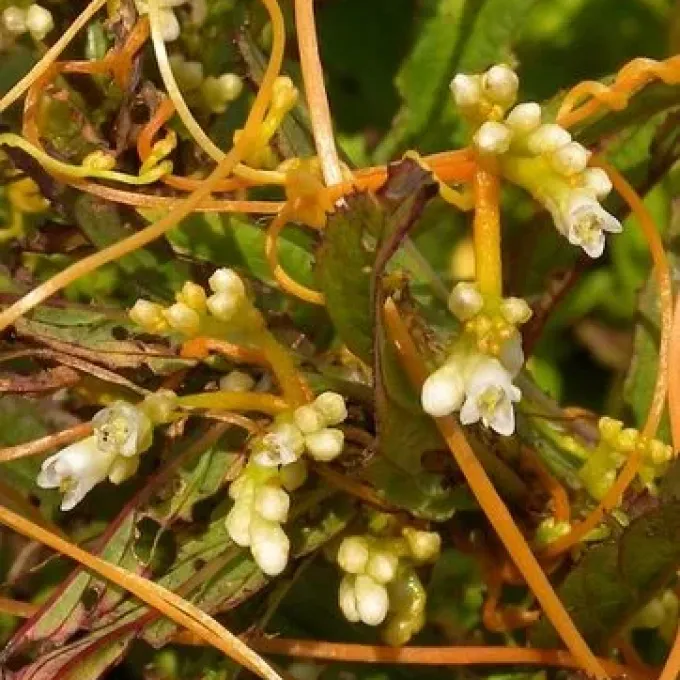
Description
Growing requirements
Flax dodder Cuscuta epilinum is a specialized parasitic plant belonging to the Convolvulaceae family. It is an obligate parasite that lacks chlorophyll and relies entirely on its host, the flax plant, for survival and development.
The plant originates from regions where flax cultivation is traditional, primarily in Europe and parts of Asia. It has evolved to synchronize its life cycle with the development of the flax plant, making it a highly effective competitor.
Flax dodder seeds germinate in the soil, producing a thin, thread-like shoot. This shoot must find a flax stem within a very short timeframe; otherwise, it will exhaust its stored nutrients and die.
Once contact with the host is established, the dodder develops haustoria. These structures penetrate the tissues of the flax plant, tapping into the vascular system to extract water, minerals, and carbohydrates.
Environmental conditions such as high humidity and moderate temperatures favor the aggressive spread of the parasite. It thrives in dense flax stands where the microclimate provides the necessary moisture for rapid growth.
Main diseases and pests
Flax dodder is classified as a significant quarantine weed in many regions. It causes severe damage by draining the host of essential nutrients, resulting in stunted growth, reduced fiber quality, and eventual death of the flax plant.
The presence of flax dodder negatively impacts the overall yield and marketability of the fiber. Infested fields often suffer from lodging, making harvest operations difficult and further degrading the product quality.
Beyond direct competition, this parasite acts as a bridge for plant viruses. By connecting multiple host plants through its network of stems, it facilitates the rapid transmission of viral diseases throughout the entire field.
Integrated pest management is crucial for control. This includes using certified weed-free seed lots, as seed contamination is the primary method of long-distance dispersal for the parasite.
Cultural practices such as crop rotation with non-host species are essential. If an infestation occurs, affected areas should be carefully managed or removed to prevent the dispersal of seeds into the soil bank for subsequent years.