
Pretty dodder
Cuscuta indecora Choisy
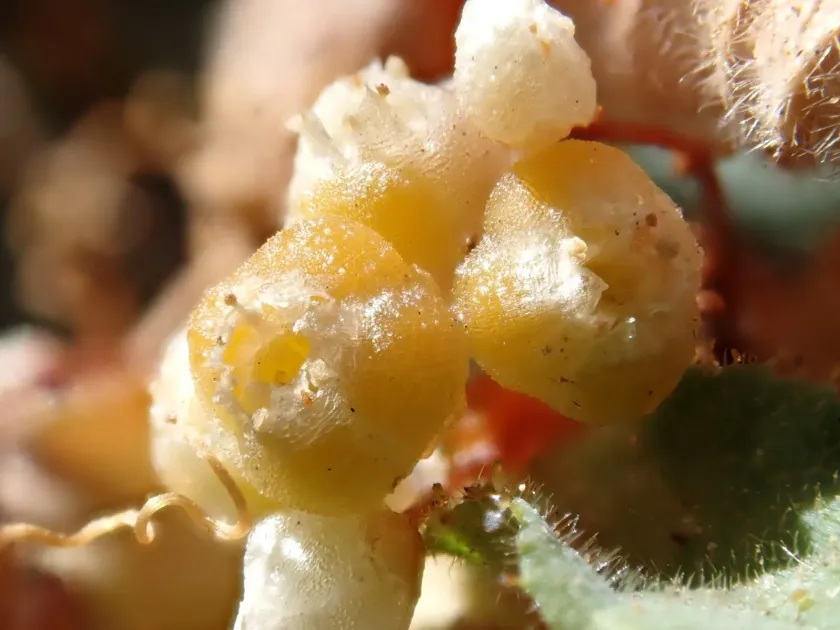
Description
Growing requirements
The pretty dodder (Cuscuta indecora) is a parasitic plant species belonging to the Convolvulaceae family. It is a stem parasite that lacks both chlorophyll and roots, relying entirely on haustoria to extract nutrients and water from its host plants.
Originating from the Americas, this species has become a significant agricultural problem in many warm-temperate regions worldwide. It is a highly invasive plant that thrives by attaching itself to a wide variety of herbaceous crops and shrubs.
The morphology consists of thin, thread-like stems that coil around the host plant. Once contact is made, specialized haustoria penetrate the host's vascular tissues, effectively stealing photosynthates and leading to stunted growth, reduced yields, or even the death of the host.
Environmental conditions such as high soil temperatures and adequate moisture are crucial for the germination of dodder seeds. These seeds can remain dormant in the soil for many years, making them a persistent threat to crop management and field health.
Agronomic control is difficult because the parasite grows simultaneously with the host crop. Prevention through clean seed supplies and strict quarantine measures is considered the most effective way to manage the presence of this species in farmland.
Main diseases and pests
The primary threat posed by Cuscuta indecora is its role as a biological vector for plant viruses. By directly connecting with the vascular system of different host plants, it facilitates the rapid transmission of systemic pathogens.
Crop loss occurs not only through resource depletion but also because the weakened state of the host makes it susceptible to opportunistic diseases and pests. The infestation significantly lowers the economic value of crops like alfalfa, tomatoes, and cotton.
Chemical control is challenging as traditional broad-spectrum herbicides often harm the host crop. Research is focused on selective management and the development of integrated pest management (IPM) strategies to mitigate damage in high-risk areas.
Scouting for the early stages of infestation is a vital component of successful management. Farmers are advised to remove infested plants manually, including the surrounding area, and dispose of them through incineration to prevent seed dispersal.
Soil management, including deep plowing and crop rotation, helps in reducing the seed bank. Maintaining field hygiene is essential to prevent the spread of this parasitic organism between different plots and neighboring agricultural lands.