
Lesser dodder
Cuscuta epithymum (L.) L.
Description
Growing requirements
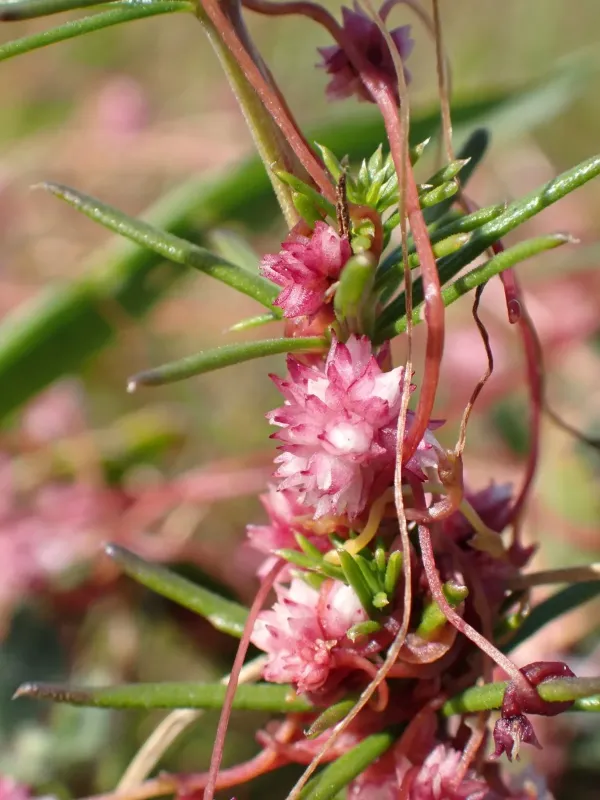
Lesser dodder (Cuscuta epithymum) is a parasitic plant belonging to the Convolvulaceae family. It is a stem parasite that lacks chlorophyll and true roots, relying entirely on a host plant for its survival, growth, and reproduction.
The native range of the species extends across Europe, parts of Western Asia, and Northern Africa. It is highly adaptable to various habitats, typically thriving in sunny areas with moderate temperatures and sufficient moisture for rapid stem elongation.
Botanically, it consists of thread-like, often reddish or yellowish stems that coil around the host plant. It uses specialized structures called haustoria to pierce the host's stems and extract nutrients, water, and carbohydrates directly from the vascular system.
While the soil type does not directly support the plant via nutrient uptake, the environment must provide suitable host species. Common hosts include legumes, herbs like thyme, and various wild forbs that allow the parasite to establish its connection.
Agricultural management relies on crop rotation and the use of clean seed stocks. Since the seeds are extremely tiny, they are often overlooked during cleaning processes, necessitating stringent quality control for agricultural products in affected regions.
Main diseases and pests
The primary threat posed by lesser dodder is the severe physiological stress it imposes on crops, often leading to reduced biomass, lower yields, and in extreme cases, the total death of the host plant due to nutrient depletion.
Dodder is a known vector for various plant viruses and phytoplasmas. By forming a bridge between infected and healthy plants, it significantly increases the rate of disease spread across a field, making pest management difficult.
Natural enemies, such as specific insects and fungi, exist in the ecosystem but are generally insufficient to control large infestations without human intervention. Monitoring fields for early-stage development is essential for containment.
Mechanical control involves cutting and removing the affected plants as soon as the dodder is detected, before it can produce its vast quantities of seeds. Burning the infected material is the recommended method for disposal to ensure total destruction.
Chemical control can be implemented using selective herbicides to target the parasite within the crop stand. However, careful application is required to avoid damaging the crop while ensuring that all haustoria connections are effectively eliminated.