
Crotalaria medicaginea
Crotalaria medicaginea Lam.
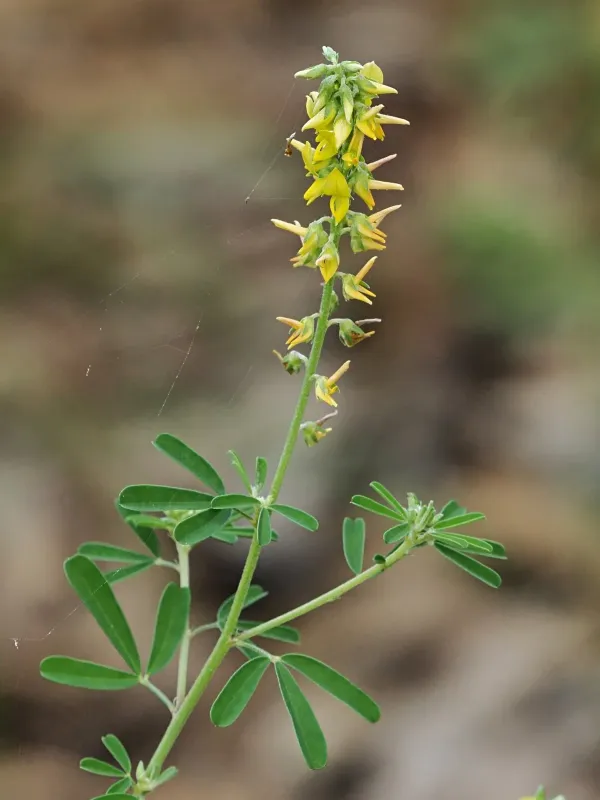
Description
Growing requirements
Crotalaria medicaginea is a perennial herbaceous plant belonging to the Fabaceae family. Originating from tropical and subtropical regions of Asia and Australia, it is highly valued for its adaptability to harsh environmental conditions and its ability to thrive in poor soils.
The plant exhibits remarkable drought tolerance, making it an excellent choice for reclamation projects in semi-arid zones. It requires full sun exposure and performs best in well-drained soils, where its deep root system can effectively utilize available soil moisture.
Agronomically, this species is recognized for its symbiotic nitrogen fixation capacity. By hosting specialized bacteria in its root nodules, it converts atmospheric nitrogen into a plant-available form, significantly enhancing the fertility of the surrounding soil.
The cultural practices for this crop are relatively straightforward due to its aggressive growth habits. It serves as an effective ground cover, suppressing weed competition and protecting the soil surface from direct solar radiation and erosion.
In terms of climate adaptation, the plant is heat-tolerant and thrives in warm, temperate to tropical climates. It does not tolerate prolonged waterlogging, which is a critical factor to consider when selecting fields for cultivation to avoid physiological stress.
Main diseases and pests
Like many legumes, Crotalaria medicaginea can be vulnerable to lepidopteran larvae that feed on foliage. Monitoring for these pests during the early vegetative stage is essential to prevent significant yield losses and preserve the plant's photosynthetic capacity.
Root rot pathogens represent the most significant threat to the crop, especially in conditions of poor drainage or high humidity. Maintaining proper soil moisture levels is the primary defense strategy to prevent the proliferation of these fungal infections.
Aphid infestations are frequently observed during periods of rapid new growth. While minor infestations may not be critical, heavy outbreaks can weaken the plant and serve as a vector for various viral diseases that negatively impact overall vigor.
Integrated pest management (IPM) practices, including the use of biological control agents, are recommended for large-scale cultivation. Avoiding the excessive use of broad-spectrum pesticides preserves natural predators that help regulate the population of harmful insects.
Prevention of disease also relies heavily on cultural practices, such as ensuring proper plant spacing and avoiding continuous monocropping. By rotating crops, farmers can effectively disrupt the life cycle of soil-borne pathogens and maintain field health.