
Crotalaria breviflora
Crotalaria breviflora DC.
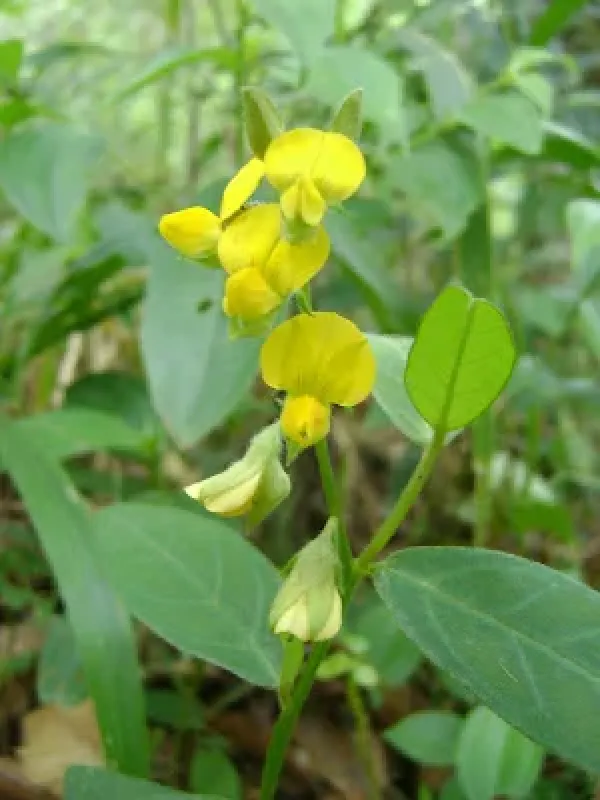
Description
Sowing dates
Sowing Crotalaria breviflora is carried out during the period when the soil is well-warmed, as the crop is thermophilic. The optimal time is late spring or early summer, once the risk of late frost has passed.
For high-quality germination, the soil should be thoroughly prepared and possess adequate moisture levels. Depending on the region and climatic zone, sowing can be performed via row drills or broadcasting, followed by light harrowing.
Seeding density varies based on the goal of cultivation, whether for green mass production or soil preparation for subsequent crops. It is recommended to maintain row spacing to facilitate weed control during the early stages of vegetation.
The sowing depth usually does not exceed 2-3 centimeters, ensuring uniform emergence under sufficient moisture conditions. It is important to avoid compacting the topsoil layer after sowing to allow unobstructed germination.
Special attention should be paid to seed material preparation, including scarification if seeds have a thick seed coat, which is characteristic of many legume species.
Growing requirements
Crotalaria breviflora belongs to the Leguminosae family and is a valuable crop for restoring soil fertility. It prefers well-drained, loose soils, as it does not tolerate waterlogging in the root zone.
The plant demonstrates high adaptability to various soil types, including poor sandy soils, thanks to its ability to enter into symbiosis with nitrogen-fixing bacteria. However, optimal growth results are achieved in neutral or slightly acidic soils.
The crop is light-loving; therefore, it is not recommended for sowing in heavily shaded areas. High insolation promotes more intense photosynthesis and the accumulation of biomass necessary for green manuring.
Temperature regulation plays a decisive role in the development of this tropical-origin plant. Optimal temperatures for active growth are in the range of 20 to 30 degrees Celsius.
Crotalaria also possesses a certain resistance to drought periods, making it a promising option for use in regions with unstable precipitation patterns during the summer months.
Yield
Economic use of Crotalaria is primarily directed at obtaining high vegetative mass. Under favorable conditions, the crop is capable of forming a significant volume of organic matter, which is subsequently incorporated into the soil.
The main advantage of using this crop lies in the accumulation of biological nitrogen. Bacteria on the plant's roots effectively fix atmospheric nitrogen, enriching the soil horizon for subsequent agricultural crops.
Green mass yield directly depends on the quality of agronomic practices, such as the application of starter doses of phosphorus fertilizers and timely weed control at the beginning of the vegetative season.
When used as a phytosanitary crop, Crotalaria helps suppress the development of soil nematodes. This makes it an indispensable tool in crop rotations where soil is severely depleted or infested with pests.
Seed yield in seed-production plots depends on the duration of the growing season and moisture availability during the flowering and fruit-setting phases.
Main diseases and pests
Despite its high resistance, Crotalaria breviflora can be subject to attacks by specific pests, especially during early developmental stages. Young shoots may attract various leaf-eating insects.
In conditions of high humidity and stagnant air, there is a risk of fungal infections such as powdery mildew or root rots. Prevention involves adherence to proper agronomic practices and ensuring ventilation in the fields.
Typical threats include:
- Leaf-eating caterpillars and beetles
- Nematode infestation during improper crop rotation
- Root rots due to waterlogging
- Viral diseases transmitted by aphids
- Competition from aggressive weeds during the seedling phase
An important protection factor is sound crop rotation planning, which excludes growing closely related crops on the same field for several consecutive years.
Chemical control is rarely applied and only in cases of massive pest outbreaks, as the primary goal of cultivation is the ecological improvement of farming systems.
Harvesting
Harvesting Crotalaria for green mass is conducted during the mass flowering phase, before seed formation begins. It is during this period that the plant contains the maximum amount of nitrogen and easily decomposable organic matter.
To incorporate the biomass into the soil, discing or shredding is used, followed by burying the plant matter into the topsoil. This allows for the maximum retention of accumulated nutrients.
If the goal of cultivation is seed production, harvesting is performed when the pods darken and the seeds reach biological maturity. Timeliness is crucial here to prevent seed shattering during over-ripening.
Mechanization of harvesting is carried out using forage harvesters for incorporation into the soil or grain combines for seed collection. It is important to correctly calibrate equipment to minimize losses.
After harvesting, seeds require immediate cleaning and drying to prevent spoilage, especially if the harvest occurred under high-moisture conditions.