
Sunn hemp
Crotalaria juncea L.
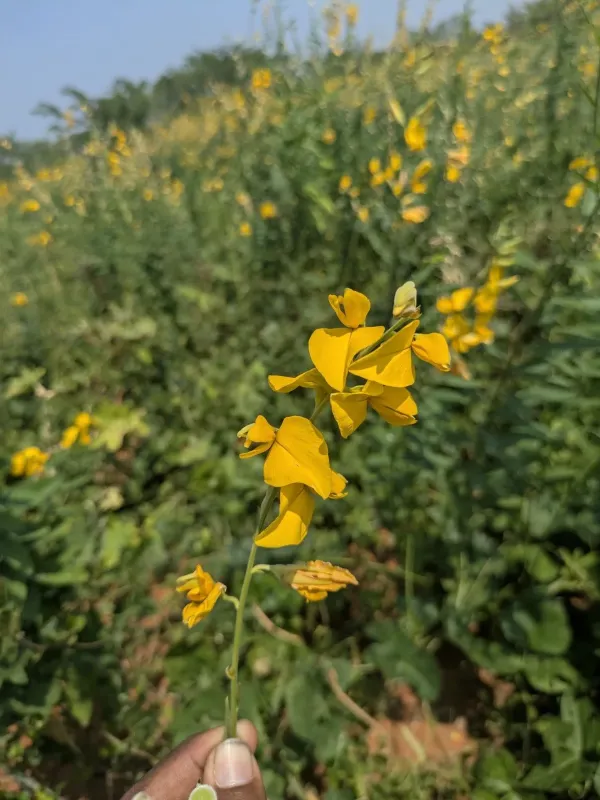
Description
Sowing dates
Sunn hemp is a warm-season annual that thrives when soil temperatures reach at least 15–20 degrees Celsius. Planting should be delayed until all risk of frost has passed to prevent damage to emerging seedlings.
Seeding rates vary significantly based on the intended use, whether it is for biomass production, fiber extraction, or seed multiplication. Row spacing is typically kept between 20 and 30 centimeters to ensure adequate density for optimal weed suppression.
The optimal planting depth is 2–3 centimeters, which ensures sufficient moisture for germination while allowing for rapid emergence. On lighter, sandy soils, slightly deeper planting is acceptable to ensure consistent seed-to-soil contact.
This crop exhibits vigorous initial growth, often outcompeting weeds within weeks of germination. Sufficient moisture during the first month is critical to establish a robust stand capable of withstanding later heat and dry spells.
In rotational planning, sunn hemp serves as an excellent preceding crop for cereals or corn, as it contributes significantly to soil organic matter and improves overall soil structure through its deep taproot system.
Growing requirements
Crotalaria juncea requires full sunlight and warm temperatures to maximize its photosynthetic activity. It performs best in tropical and subtropical climates where temperatures consistently remain between 25 and 30 degrees Celsius.
While adaptable to various soil types, sunn hemp prefers well-drained loams and sandy soils. It is highly sensitive to waterlogged conditions, which can lead to root rot and severely hinder growth if drainage is not properly managed.
One of the primary benefits of sunn hemp is its exceptional drought tolerance. Once established, the deep root system allows it to extract moisture from deeper soil layers, making it a reliable choice for regions with erratic rainfall patterns.
Sunn hemp is highly efficient at atmospheric nitrogen fixation when inoculated with the correct strain of Bradyrhizobium bacteria. This biological process significantly reduces the need for nitrogen fertilizers in subsequent crops.
Phosphorus and potassium availability is important for developing strong stalks, especially when grown for fiber. These nutrients support the structural integrity of the plant and contribute to higher overall biomass production.
Main diseases and pests
Pests such as aphids and thrips can cause damage by feeding on young foliage and potentially transmitting viruses. Monitoring the field during the early vegetative stages is essential to detect pest outbreaks and intervene when necessary.
Fungal diseases, including Fusarium wilt, are more prevalent in overly damp environments or in fields where drainage is poor. Implementing proper crop rotation and avoiding continuous monocropping are the best defensive strategies.
Anthracnose can affect stem health under high humidity conditions, resulting in dark lesions that degrade fiber quality. Timely application of fungicides or selecting resistant cultivars can mitigate the impact of this disease.
Nematode pressure can increase if legumes are grown repeatedly on the same land. Maintaining a diverse rotation schedule helps suppress nematode populations and preserves soil health for future planting cycles.
Generally, weed control is only necessary during the first few weeks after planting. Once the canopy closes, the fast-growing sunn hemp effectively shades the ground, preventing weeds from establishing themselves under the dense foliage.
Harvesting
When grown for fiber, the crop should be harvested during the flowering stage. At this point, the stems contain the highest concentration of high-quality fiber, ensuring a balance between biomass yield and material durability.
Seed harvesting requires waiting until the pods turn dark and reach physiological maturity. Careful mechanical handling is necessary during harvesting to minimize pod shattering and reduce losses caused by over-dry stalks.
For green manure purposes, the crop should be incorporated into the soil shortly after flowering begins. This timing ensures that the plants are rich in fixed nitrogen and that the organic matter decomposes quickly in the soil.
After mechanical cutting or disking, the plant material is incorporated into the topsoil to enhance organic matter content. This practice improves soil fertility and enhances water infiltration rates for the following cash crop.
Seed storage requires drying the collected pods to a moisture level below 14 percent to prevent microbial growth and ensure high germination rates for the following season. Proper storage conditions are essential to maintain viability.