
Crotalaria brevidens
Crotalaria brevidens Benth.
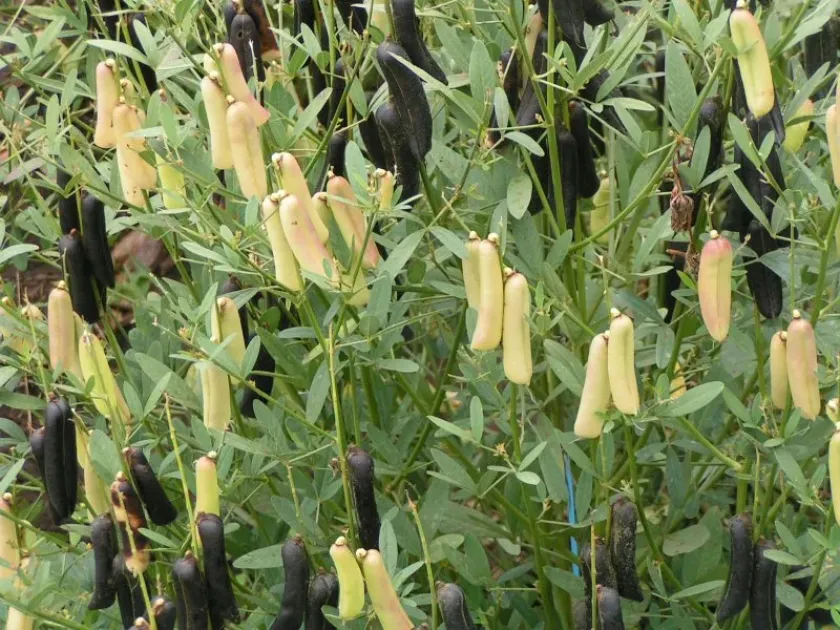
Description
Sowing dates
Crotalaria brevidens is typically sown in well-prepared, loose soil once the risk of frost has completely passed. The seeds require stable warm temperatures to germinate successfully, making the beginning of the rainy season an ideal window for planting in tropical and subtropical regions.
For optimal results, seeds should be sown at a depth of approximately 2 to 3 centimeters. Spacing between rows should range from 30 to 45 centimeters to ensure each plant has sufficient access to nutrients, light, and air circulation throughout its vegetative development.
Before sowing, it is beneficial to treat the seeds to break physical dormancy. Brief scarification or soaking in warm water for several hours can significantly improve the germination rate and ensure a more uniform stand establishment across the field.
The seeding rate can be adjusted based on the intended use. If the crop is grown as a leafy vegetable, wider spacing is preferred to encourage branching. For green manure purposes, higher density seeding is recommended to maximize biomass production.
Field preparation must include the removal of aggressive weeds, as the young seedlings of Crotalaria brevidens can be outcompeted during the early stages of establishment. Once established, the crop grows vigorously and effectively shades the ground.
Growing requirements
This legume species thrives in sunny environments and prefers well-drained soils. While it shows remarkable tolerance for diverse soil types, including sandy and acidic soils, it performs best in soils rich in organic matter with a neutral to slightly acidic pH.
Crotalaria brevidens is highly efficient at atmospheric nitrogen fixation through its root nodules. This attribute reduces the need for nitrogenous fertilizers, making it a sustainable choice for soil improvement and organic agricultural practices.
Adequate water supply is essential during the initial growth phase. Once established, the plant demonstrates good drought resistance due to its deep root system, although consistent moisture levels significantly increase the production of succulent, harvestable leaves.
Optimal temperature ranges for growth are between 20°C and 30°C. Extreme cold or frost will severely damage or kill the plants, while excessively high temperatures combined with extreme humidity may increase susceptibility to fungal pathogens.
Regular monitoring of soil fertility is recommended, specifically for potassium and phosphorus levels, which support root growth and nodule efficiency. Proper field rotation helps prevent nutrient depletion and suppresses the buildup of soil-borne diseases.
Yield
The yield of Crotalaria brevidens is largely determined by its intended application. As a leafy vegetable, it provides a high-protein crop that can be harvested multiple times throughout the growing season by trimming the top shoots.
When used as green manure, the yield of biomass is substantial. Harvesting should be timed to occur before the onset of flowering, which ensures that the plant tissue is nutrient-dense and easily decomposable once incorporated into the soil.
Seed production is another viable yield component. To achieve high-quality seeds, the plants must be allowed to reach full maturity, which requires a longer growing cycle compared to harvesting for leaves or green manure.
Proper harvest timing is crucial to avoid loss. For seed crops, once the pods change color, careful handling is required to prevent premature shattering, as the pods of Crotalaria species are prone to splitting when dry.
Overall productivity is high, especially under conditions of optimal light exposure. The plant’s ability to regrow after pruning allows farmers to maximize land use efficiency throughout the peak of the growing season.
Main diseases and pests
Pests such as aphids and leaf-eating caterpillars are the most common threats to this crop. These insects can cause significant damage to young leaves, affecting both the aesthetic quality for vegetable markets and the overall plant vigor.
Fungal diseases like powdery mildew can emerge in conditions of high humidity or poor air circulation. Ensuring proper plant spacing and implementing preventive measures, such as removing affected plant material, can help mitigate these risks.
Root-knot nematodes can potentially infest the root system, inhibiting nutrient uptake. Practicing a strict crop rotation schedule, avoiding consecutive years of legume cultivation on the same plot, is the most effective way to prevent nematode buildup.
Viral infections may manifest as leaf mosaic or yellowing, often transmitted by insect vectors. Keeping the field free from weeds that act as alternate hosts for these insects is a vital part of integrated pest management strategies.
The use of certified, clean seeds is the primary step in preventing the introduction of pathogens to the field. Regular scouting allows for early detection of potential threats, enabling targeted and more effective management interventions.
Harvesting
Harvesting for fresh consumption should be done by plucking the tender, upper leaves and terminal buds. This method not only provides a high-quality product but also promotes a bushier growth habit for higher future harvests.
For green manure, the crop should be mowed or incorporated into the topsoil just as the first flower buds appear. This ensures the carbon-to-nitrogen ratio is optimal for rapid decomposition and nutrient release in the soil profile.
Seeds are harvested when the pods turn dark brown. After harvesting, they should be dried in a well-ventilated area, protected from direct sunlight, to reduce the moisture content to a safe level for long-term storage.
Once dry, the seeds are threshed and cleaned of debris. Storing them in airtight containers in a cool, dark place will preserve their viability for several seasons, ensuring a reliable source of high-quality planting material for future years.
Waste biomass not used for compost or green manure can serve as an excellent mulch, protecting the soil from erosion and preserving moisture for subsequent crops in the rotation cycle.