
Creeping willow
Salix repens L.
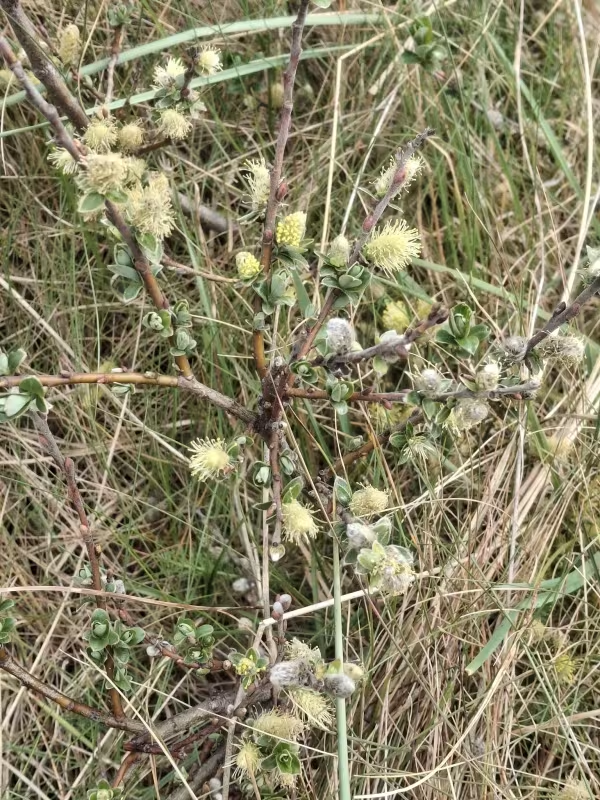
Description
Sowing dates
The propagation of creeping willow (Salix repens L.) in nursery settings is most often carried out by vegetative methods, specifically through cuttings. The best time for collecting hardwood cuttings is early spring, before active sap flow begins in the plant tissues.
Softwood cuttings are taken during the summer, usually in June or July, when young shoots reach the semi-lignified stage. This method allows for a high yield of quality planting material when proper temperature and humidity levels are maintained in greenhouses.
Planting rooted seedlings into open ground at a permanent location is mainly performed in the spring, which gives the plant enough time for adaptation and the formation of a developed root system before the first winter frosts.
Autumn planting is also possible in temperate climate regions, but it requires careful mulching of the root zone. In northern latitudes, autumn planting is strongly discouraged due to the high risk of freezing for plants that have not had time to establish.
Planting density varies depending on the intended use. To create a continuous ground cover, it is recommended to space plants 0.5 to 1 meter apart, which ensures rapid canopy closure and the suppression of weed growth.
Growing requirements
Creeping willow belongs to the Salicaceae family and is a low-growing shrub with flexible, trailing stems. It is a light-loving culture that develops most effectively in open, well-lit areas.
The plant shows high ecological plasticity, but it prefers moderately moist, sandy or loamy soils with an acidic or neutral reaction. Despite its love for moisture, it is capable of withstanding temporary soil drying due to its shallow root system.
The species is highly winter-hardy, which is typical for plants from the Northern Hemisphere, making it promising for cultivation in various climate zones. Creeping willow does not require complex agricultural techniques, limited to timely pruning to maintain its decorative shape.
In industrial landscaping, willow is valued for its ability to stabilize slopes and prevent soil erosion. Its long, flexible branches, when in contact with the ground, can develop additional roots, which promotes natural compaction of the plant cover over large areas.
For optimal growth in a garden setting, it is recommended to apply complex mineral fertilizers in the spring. This stimulates active biomass growth and makes the foliage more saturated in color, increasing the plant's overall aesthetic appeal.
Main diseases and pests
Creeping willow, like other members of the genus Salix, is prone to a number of fungal diseases. Among the most dangerous is powdery mildew, which affects leaves during hot and humid summers, causing a whitish coating and premature leaf drop.
Leaf spot is another common problem caused by pathogenic fungi. With severe infestation, the shrub can lose its ornamental value, so it is important to carry out preventive spraying with copper-based fungicides at the beginning of the growing season.
Among insect pests, the willow leaf roller and various types of aphids cause the most damage. These pests feed on the sap of young leaves and shoots, leading to curling, deformation, and a significant slowdown in the growth rates of the entire crop.
Willow moths and other chewing insects can also pose a threat by eating leaf blades to the skeletal state. Systemic insecticides are used to combat pests, effectively protecting the plant for several weeks after application.
To prevent the spread of diseases and pests, it is crucial to adhere to agricultural norms: avoid soil waterlogging, ensure good air circulation between plants, and remove damaged parts of the bush in time, which must be destroyed away from the site.
Harvesting
The commercial use of creeping willow rarely involves mass harvesting of biomass, but if cuttings are needed, shoots are harvested annually. Pruning for material collection is best combined with the shrub's structural trimming.
The collection of shoots for decorative purposes or for weaving miniature items is carried out in late autumn or early spring when the branches are in a dormant state. At this time, the bark is most durable, and the wood possesses the necessary flexibility.
To preserve the health of the mother plant when collecting cuttings, a disinfected pruner should be used. It is important not to remove more than a third of the canopy at one time to ensure the bush can quickly recover its vegetative mass in the coming season.
The cut material requires immediate processing if propagation is planned or storage in a cool room with high humidity. This prevents tissue desiccation and preserves bud viability until the moment of planting in the ground.
When using willow as a ground cover crop, yield is expressed in the increase of the covered area. Regular sanitary cleaning of dry and damaged branches is a mandatory procedure to maintain the aesthetic appearance and health of the plantations.