
Crassula swaziensis
Crassula swaziensis Schönland
Description
Growing requirements
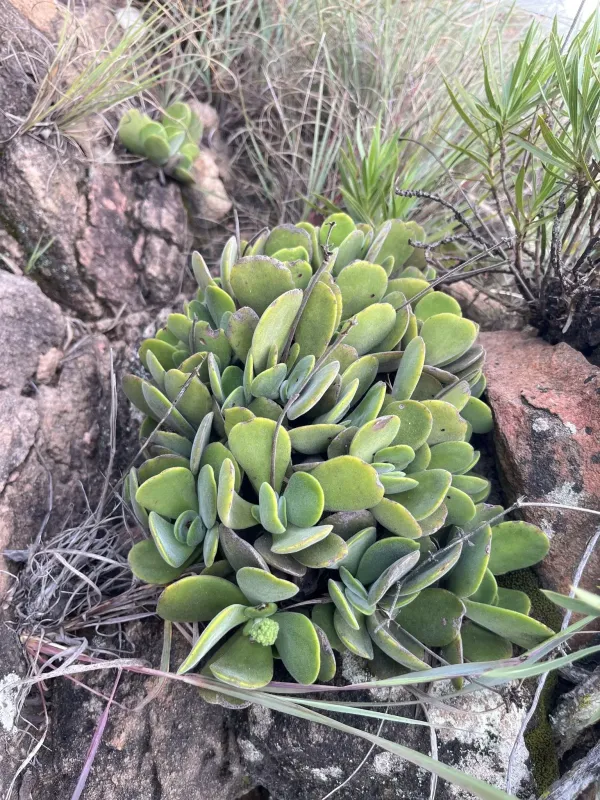
Crassula swaziensis is a perennial succulent species belonging to the Crassulaceae family. Native to the mountainous regions of Southern Africa, particularly Eswatini and South Africa, this plant has adapted to survive in harsh, rocky environments with limited soil moisture.
The plant is known for its compact rosettes and leaves covered with fine, soft hairs, which provide a distinct velvety texture. Under optimal sunlight conditions, the edges of its leaves often develop a reddish hue, enhancing its ornamental appeal for collectors.
The primary agronomic requirement for this species is a highly porous, well-draining soil medium. A standard mix should include grit, pumice, or coarse sand combined with a small portion of loam to ensure that no water stays around the root zone for an extended period.
Light intensity is crucial for maintaining the plant's shape and color. It thrives in bright, indirect light, though it can tolerate some direct morning sun. Lack of light results in etiolation, where the stem becomes weak and the leaves lose their characteristic arrangement.
Temperature management follows the typical rhythm of succulent cycles. It prefers warm conditions during the growing season and a cooler, dormant period during winter, with temperatures dropping to about 12–15 degrees Celsius to encourage healthy spring growth.
Main diseases and pests
The most significant threat to Crassula swaziensis is root rot, which typically stems from overwatering. Maintaining a strict "dry-out" period between waterings is the most effective way to prevent this common physiological disorder.
Common pests include mealybugs, which tend to hide in the tight clusters of leaves where the velvety hairs make them difficult to detect. Spider mites may also occur if the ambient humidity is kept too low for long periods.
Effective pest management involves using systemic insecticides or insecticidal soaps applied carefully to the foliage. It is important to treat the plant at the first sign of infestation to prevent the spread to other succulent collections.
Poor ventilation can promote fungal infections, which manifest as dark, soft spots on the stems. Ensuring proper air movement around the plant is essential for mitigating the risk of pathogen accumulation in the foliage.
Finally, avoid overhead watering to keep the leaf surface dry, as moisture trapped in the crevices of the rosette can serve as a breeding ground for bacteria, especially in environments with limited sunlight.