
Crassula mesembryanthoides
Crassula mesembryanthoides (Haw.) D. Dietr.
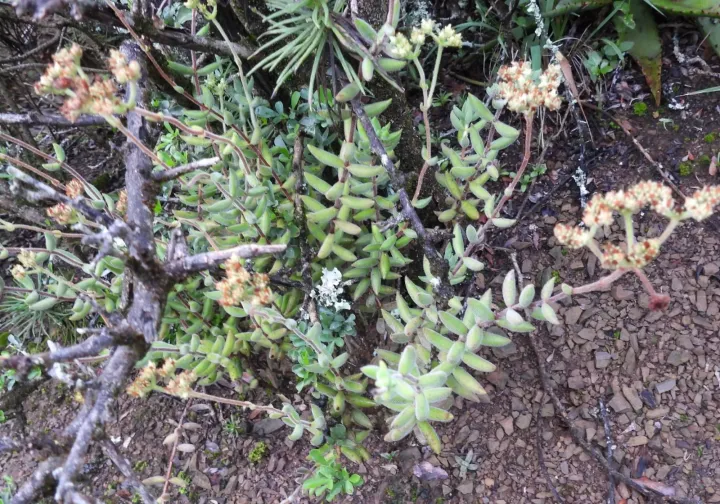
Description
Growing requirements
Crassula mesembryanthoides is a perennial succulent plant belonging to the Crassulaceae family. Native to the arid regions of the Cape Province in South Africa, it has evolved to thrive in high-light, low-moisture environments.
The botanical structure of the plant consists of branched stems covered in fleshy leaves, which are densely coated with short, white hairs. This specialized foliage helps the plant reduce transpiration and protect itself from intense desert sunlight.
Regarding environmental requirements, this species demands bright, direct light to maintain its compact growth habit and silver coloration. In indoor agricultural settings, it requires high-intensity lighting if natural sunlight is insufficient.
The soil substrate must be highly porous and inorganic-heavy to prevent water stagnation. A standard mix typically includes pumice, coarse sand, and a small portion of peat or organic matter to provide minimal nutrient support while ensuring rapid drainage.
In terms of agricultural use, this plant is primarily propagated for the commercial houseplant market. It is prized for its architectural form and ability to withstand neglect, making it a staple in xeriscaping and container gardening collections.
Main diseases and pests
Mealybugs are the primary pest affecting this crop. Their presence is often detected by white, cotton-like masses found in the leaf axils. Because of the plant's fuzzy texture, manual removal is difficult, often requiring systemic insecticides.
Root rot, caused by fungal pathogens such as Pythium and Phytophthora, is the most common physiological threat. It is almost exclusively the result of overwatering or the use of heavy, poorly draining growing media.
Fungal leaf spots can develop when the foliage remains wet for extended periods or when airflow is severely restricted. Maintaining optimal air circulation is essential for reducing the risk of these opportunistic infections.
Root aphids may also infest the root system, stunting growth and leading to yellowing of the leaves. Soil drenching with appropriate horticultural products is necessary to manage these underground pests effectively.
Cultural practices focusing on "dry-out" cycles between irrigations are the most effective way to prevent the majority of the aforementioned threats in professional cultivation.