
Crassula elegans namibensis
Crassula elegans Schönland & Baker f. subsp. namibensis (Friedrich) Toelken
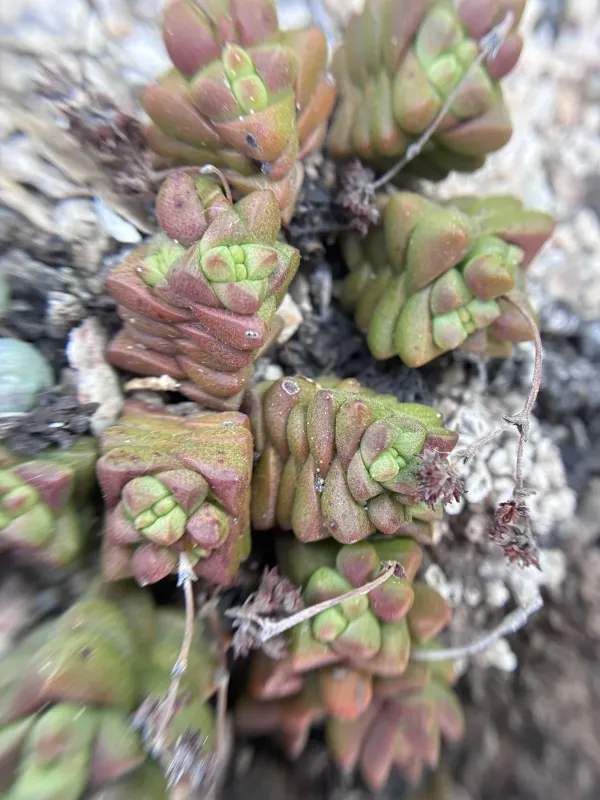
Description
Growing requirements
Crassula elegans subsp. namibensis is a member of the Crassulaceae family, specifically adapted to the arid environments of the Namib Desert. This succulent is prized by collectors for its compact, architectural growth pattern and delicate, textured leaves.
The plant requires high light intensity to maintain its characteristic compact form and vibrant coloration. Indoors, it should be placed in a spot that receives plenty of bright, indirect light; during peak summer, mild shading may be necessary to prevent leaf scorching.
The growing medium must be highly porous and inorganic. A professional succulent mix comprising perlite, pumice, and a small amount of sandy soil is essential to ensure that water does not remain trapped around the root zone, which is critical for health.
Climate requirements involve significant diurnal temperature shifts. While the plant enjoys warm days, it thrives when nighttime temperatures are somewhat lower, reflecting its natural habitat. During the winter dormancy period, a cool environment is vital for its health.
Watering should be performed only when the substrate is entirely dry. Overwatering is the most common cause of failure in this species. During the colder winter months, the plant should be kept almost completely dry to prevent rot and encourage natural dormancy.
Main diseases and pests
The most significant threat to Crassula elegans namibensis is fungal rot resulting from excessive humidity and poorly draining soil. Root rot often manifests as a loss of turgor in the leaves, followed by rapid discoloration and collapse of the plant structure.
Mealybugs are common pests that tend to hide in the dense clusters of leaves. Because of the plant's delicate architecture, these pests can be difficult to remove; regular inspection and the use of systemic insecticides are recommended for effective control.
Spider mites may appear in environments with extremely low humidity and lack of airflow. These tiny pests suck sap from the leaves, leaving characteristic spotting and weakening the overall plant vigor over extended periods.
Bacterial soft rot can occur if the plant is kept in stagnant, humid conditions with poor ventilation. To prevent this, ensure that the plant is always placed in an area with good air circulation, especially after watering cycles.
To maintain plant health, it is important to avoid getting water into the center of the rosettes. Using a narrow-spout watering can to direct moisture only to the soil surface is a best practice for long-term successful cultivation.