
Crassula nudicaulis
Crassula nudicaulis L.
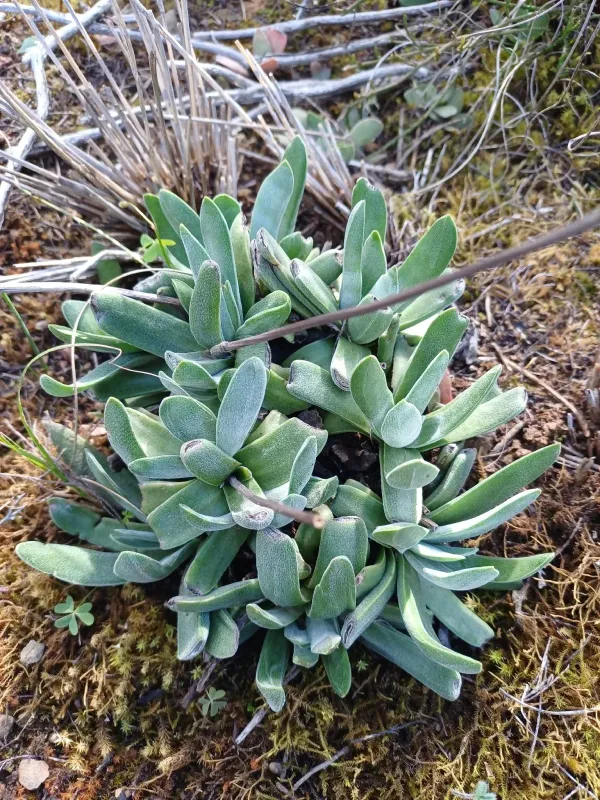
Description
Growing requirements
Crassula nudicaulis is a distinct succulent belonging to the Crassulaceae family. Native to the arid regions of Southern Africa, it has evolved to store water in its leaves, making it a drought-tolerant species.
This plant thrives in bright, indirect sunlight. While it can handle some direct morning sun, it is essential to protect it from harsh afternoon rays, which can cause severe dehydration and scorching of the leaf epidermis.
The ideal growing medium for this species is a well-draining, gritty mix. A typical succulent substrate, such as a blend of potting soil, coarse sand, and perlite, is necessary to prevent water retention around the roots.
During the growing season, Crassula nudicaulis requires a warm environment with temperatures between 20°C and 25°C. A cooler winter period, with temperatures ranging from 12°C to 15°C, is recommended for dormancy.
Watering must follow a strict "soak and dry" method. It is crucial to allow the soil to become completely dry throughout the entire pot depth before applying water again, especially during cooler winter months.
Main diseases and pests
The most significant threat to Crassula nudicaulis is root rot, which occurs due to overly damp soil conditions. This fungal condition can quickly destroy the plant's vascular system if not caught early.
Common pests include mealybugs, which tend to congregate in the axils of the leaves. These insects extract sap and weaken the plant, often leading to secondary infections or the appearance of sooty mold.
Spider mites can also be a challenge in low-humidity environments. These microscopic pests weave fine webs and cause stippling on the leaf surface, significantly reducing the plant's photosynthetic capacity.
Proper sanitation and the removal of dead or decaying foliage help in preventing the establishment of fungal spores. Providing adequate space between plants improves airflow and reduces humidity-related diseases.
In case of pest infestation, systematic application of horticultural oils or approved insecticides is recommended to eliminate the population while ensuring the health of the succulent tissues is preserved.