
Crassula elegans
Crassula elegans Schönland & Baker f.
Description
Growing requirements
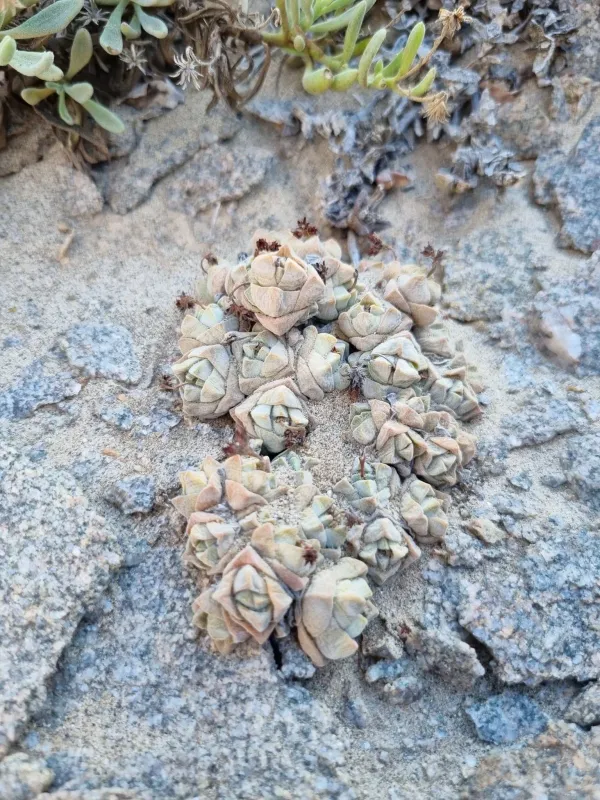
Crassula elegans belongs to the Crassulaceae family and is recognized as a miniature succulent characterized by its low-growing habit and dense leaf rosettes.
This species is native to the arid regions of Southern Africa, where it has evolved to thrive on rocky substrates under intense sunlight and minimal rainfall.
For successful cultivation, Crassula elegans requires a bright location with access to direct morning or evening sunlight to maintain its structural integrity.
The substrate must be highly porous and inorganic, typically consisting of pumice, perlite, and coarse sand to ensure efficient drainage and prevent root suffocation.
The plant demonstrates high tolerance to heat, yet it requires a dry dormant period during winter, with temperatures ideally kept between 10 and 15 degrees Celsius.
Main diseases and pests
The primary threat to Crassula elegans is fungal rot caused by overwatering, which manifests as darkened, mushy tissue at the base of the stem or root collar.
Mealybugs are the most common insect pests, often hiding in the tight crevices between leaves, where they feed on the plant's sap and weaken the overall structure.
Root rot pathogens become particularly aggressive during the winter months if the plant is kept in a substrate that remains damp for extended periods.
Providing adequate air circulation is essential for mitigating the risk of pest outbreaks and preventing the development of mold on the foliage surface.
If an infestation occurs, specialized horticultural soaps or systemic insecticides should be used carefully, following the specific dosage recommendations for succulents.