
Crassula mesembryanthoides hybrid
Crassula mesembryanthoides (Haw.) D. Dietr. x Crassula rupestris Thunb.
Description
Growing requirements
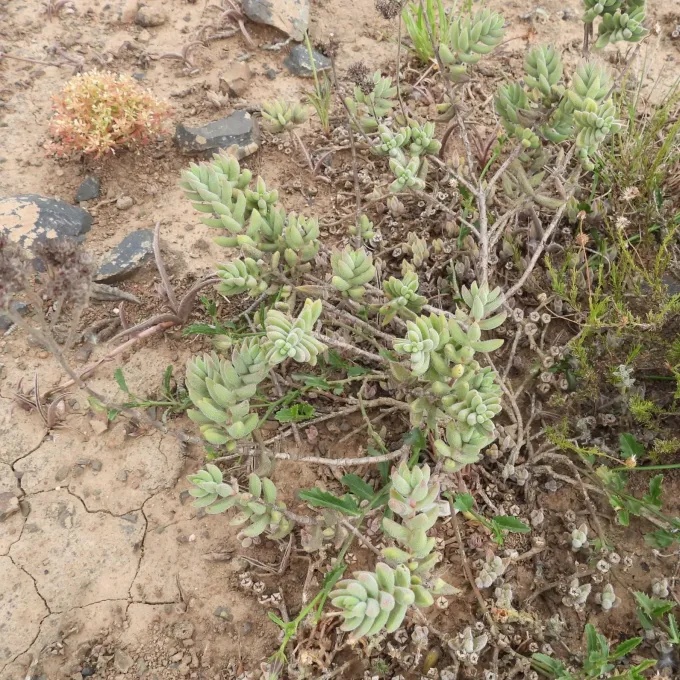
Crassula mesembryanthoides hybrid (Crassula mesembryanthoides x Crassula rupestris) belongs to the Crassulaceae family. This hybrid is highly valued for its aesthetic foliage and compact growth habit, typical of succulents originating from the arid regions of Southern Africa.
The plant requires high light levels to thrive and maintain its characteristic form. Without sufficient sunlight, the stems tend to stretch and become brittle, losing their ornamental appeal. A south or west-facing window is ideal for year-round cultivation.
Soil composition must prioritize drainage over fertility. A specialized mix for succulents, containing pumice, coarse sand, and a small amount of peat, ensures that excess water drains quickly, protecting the roots from the common threat of moisture retention.
Watering requirements are strictly seasonal. During the active growing period in spring and summer, the plant should be watered only after the substrate has completely dried out. Winter dormancy requires near-total suspension of watering to simulate the dry season in its native habitat.
Temperature management is critical for the health of this hybrid. While it can withstand occasional heat, it is sensitive to prolonged cold and dampness, which can trigger stress responses and susceptibility to various pathogens.
Main diseases and pests
Mealybugs are the primary pest concern for this species. Their white, cotton-like masses are easily hidden among the fine hairs on the leaves, making early detection and treatment with alcohol-based solutions or systemic insecticides vital.
Root rot, caused by overwatering or poorly draining soil, is the most common cause of plant loss. Once the root system decays, the plant cannot absorb nutrients, leading to yellowing leaves and eventually total collapse of the stem structure.
Scale insects can occasionally infest the stems. They extract plant fluids, causing localized tissue damage and creating sticky residue that can attract secondary fungal infections such as sooty mold.
Spider mites are a potential threat in environments with low humidity and poor ventilation. They cause fine webbing and discoloration of the foliage, which can be managed by increasing humidity or using horticultural soaps.
Regular sanitation and keeping the foliage dry are effective prophylactic measures. Ensuring good airflow around the plant minimizes the risk of bacterial and fungal outbreaks common in confined greenhouse or indoor environments.