
Schmidt's Crassula
Crassula schmidtii Regel
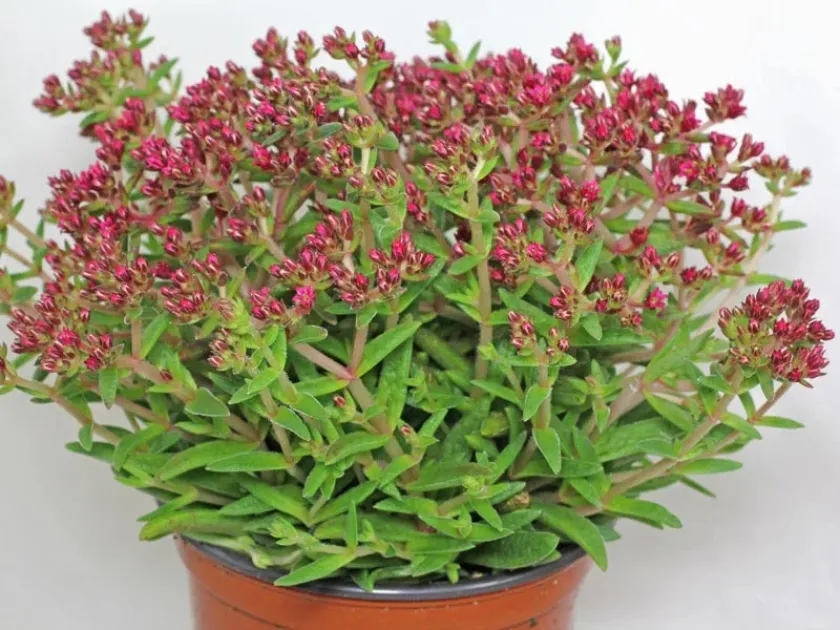
Description
Sowing dates
Schmidt's Crassula (Crassula schmidtii) is primarily propagated through stem cuttings, which is the most reliable method for maintaining desired traits.
The best time for propagation is during the active growing season, when the plant has sufficient energy for root development.
Seeds can be used, but they require a very light, well-draining substrate and consistent temperatures between 20–22 degrees Celsius to germinate.
When sowing, seeds should be lightly pressed into the surface of the soil and kept in a bright, humid environment until sprouting occurs.
Once seedlings have established two or three pairs of leaves, they should be transplanted into individual small pots with appropriate succulent mix.
Growing requirements
This species belongs to the Crassulaceae family and originates from South Africa, where it thrives in rocky and arid environments.
The plant demands high light intensity to maintain its compact form; insufficient light often leads to leggy growth and pale foliage.
A soil mixture consisting of coarse sand, perlite, and a small amount of peat is ideal for providing the necessary aeration for the root system.
Watering should be performed only when the soil has dried out completely; the plant is highly sensitive to waterlogged conditions.
During the dormant winter phase, the plant prefers cooler temperatures and a significant reduction in irrigation to prevent root rot.
Main diseases and pests
Common pests affecting this culture include mealybugs and spider mites, which typically thrive in dry, stagnant air conditions.
Root rot caused by fungal pathogens is the most critical threat to the plant, usually triggered by excessive watering or poor drainage.
To control pest populations, regular cleaning of the foliage and the use of insecticidal soaps or systemic treatments are highly recommended.
Maintaining proper air circulation around the plant is a key preventive measure against most fungal and insect-related problems.
If rot is detected, the affected parts must be surgically removed, and the plant should be re-potted into fresh, sterile, and dry substrate.
Harvesting
Schmidt's Crassula is primarily utilized as an ornamental plant in interior design, rock gardens, and specialized succulent collections.
The harvesting of plant material is limited to collecting cuttings for multiplication during the maintenance of established mother plants.
Pruning is essential for maintaining the shape of the plant, as it encourages dense branching and improves the overall aesthetic value.
As a decorative species, it requires minimal intervention, provided that the basic environmental requirements are consistently met.
The plant has no agricultural or culinary value, serving exclusively as a botanical specimen appreciated by hobbyists and professional florists.