
Crassula rupestris
Crassula rupestris Thunb.
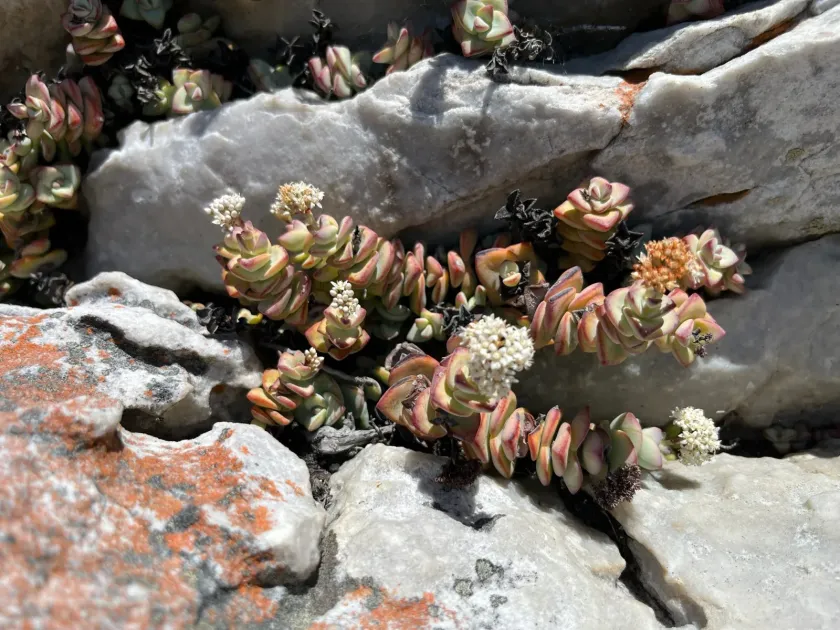
Description
Growing requirements
Crassula rupestris belongs to the Crassulaceae family and is a popular succulent native to the arid rocky regions of South Africa. It is highly valued in horticulture for its distinct structural shape and ease of maintenance in container gardening.
Botanically, this plant is characterized by its woody stems and fleshy, ovate leaves arranged in opposite pairs. These leaves often exhibit beautiful red margins when exposed to sufficient sunlight, which is a key aesthetic feature of the species.
The plant requires full sun exposure to maintain its compact growth form. If kept in shaded conditions, the stems will stretch significantly, leading to a weak, leggy appearance that compromises the plant's natural beauty and structural integrity.
Soil requirements are critical for the health of Crassula rupestris. It demands a highly porous, fast-draining potting medium, such as a specialized cactus mix enriched with perlite, pumice, or coarse sand to prevent moisture retention around the roots.
Watering practices should follow the "soak and dry" method, where the substrate is allowed to dry out completely before the next application. During the winter dormant phase, water frequency must be drastically reduced to mirror the plant's natural cycle.
Main diseases and pests
Common pests associated with this succulent include mealybugs, which tend to hide in the tight leaf axils, and scale insects that attach themselves to the stems.
The most frequent physiological issues arise from waterlogging. Overwatering inevitably leads to root rot and stem rot, which can kill the plant quickly if not addressed by adjusting the irrigation frequency and improving substrate drainage.