
Propeller plant
Crassula perfoliata L.
Description
Growing requirements
Crassula perfoliata, commonly known as the Propeller plant, belongs to the Crassulaceae family. Native to South Africa, this succulent has evolved to thrive in rocky, arid environments with limited nutrient availability.
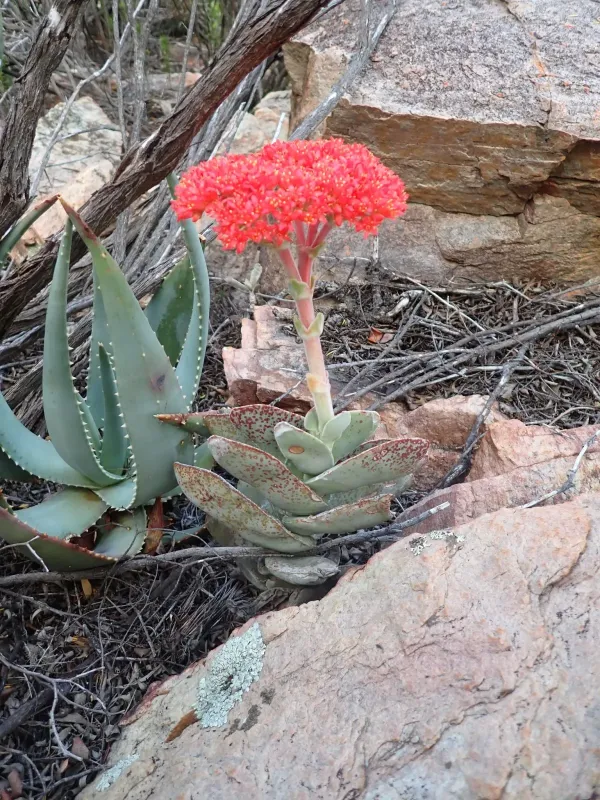
The plant is defined by its distinct foliage, often arranged in a propeller-like fashion, and its vibrant, dense flower clusters. These features make it a popular species for arid landscaping and specialized indoor cultivation.
Optimal growth requires high light intensity, as the plant needs full sun to maintain its structural integrity and color. Insufficient light levels will lead to etiolation, causing the stems to stretch and weaken significantly.
The soil must be well-draining, typically consisting of a porous mix of coarse sand, perlite, and a small portion of organic matter. This structure is essential to prevent moisture retention that can damage the root system.
Watering requirements follow the cycle of the growing season. During spring and summer, it needs occasional, deep watering followed by a drying phase. During dormancy, water should be withheld to prevent internal rot.
Main diseases and pests
Root rot is the most common threat to Crassula perfoliata, usually resulting from overwatering or inadequate soil drainage. This fungal condition can quickly spread through the leaves and cause total plant loss.
Mealybugs are the primary pest affecting this crop, often hiding in the crevices between leaves. They extract plant sap and weaken the succulent, leaving behind a waxy residue that attracts secondary fungal infections.
Spider mites can also be a problematic pest, particularly in environments with poor air circulation and low humidity. They weaken the plant by feeding on the cellular content of the leaf tissue.
Scale insects present another challenge, as they attach themselves to the stems and leaves, becoming resistant to many topical treatments. Consistent monitoring and manual removal are critical in controlling infestations.
Maintaining proper hygiene by cleaning tools and using sterile soil media remains the best defense against pests and diseases. Early intervention remains the most effective management strategy for any infestation.