
Ward's cotoneaster
Cotoneaster wardii
Description
Growing requirements
Ward's cotoneaster (Cotoneaster wardii) is an ornamental evergreen shrub belonging to the Rosaceae family. It originates from the high-altitude regions of China, which defines its preference for temperate climates with cool, well-defined seasons.
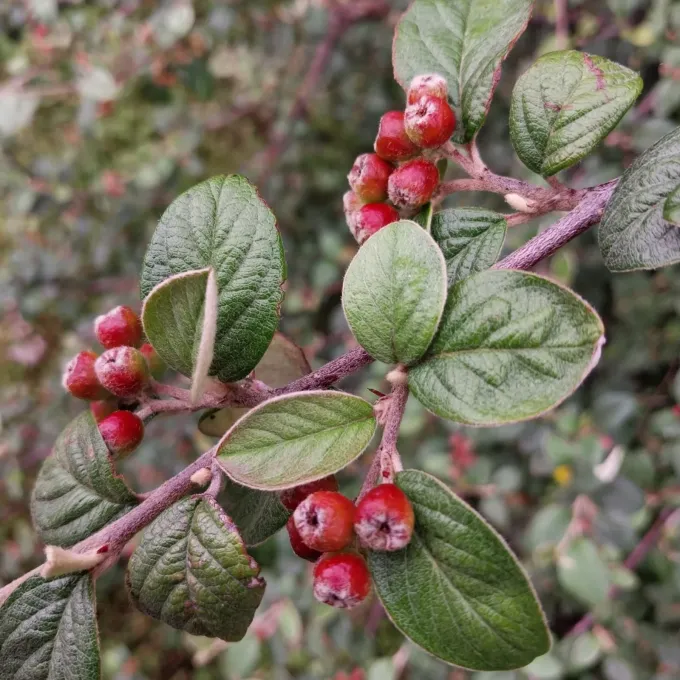
The species thrives in sunny or semi-shaded locations with well-drained, fertile soil. It is particularly valued for its bright, persistent berries and glossy foliage, which remain attractive throughout the autumn and early winter months.
Regarding soil requirements, the plant prefers substrates with moderate fertility and a neutral pH. It is generally intolerant of heavy, waterlogged clay, which can lead to root rot; thus, incorporating sand or fine gravel into the planting hole is highly recommended for proper drainage.
The shrub shows significant drought tolerance once established, making it a reliable choice for low-maintenance landscaping. Irrigation is primarily required during the first two growing seasons to ensure deep root penetration and healthy initial development.
Pruning should be performed early in the spring to remove dead or diseased wood. Because the plant responds well to shearing, it is frequently used to form dense, formal hedges or as a structural element in shrub borders.
Main diseases and pests
The primary fungal threat to this species is powdery mildew, particularly in areas with stagnant air and high humidity. Improving airflow through regular thinning of the inner branches significantly reduces the risk of infection.
Aphids are the most common insect pests, typically clustering on tender new growth. Effective management involves the use of horticultural oils or insecticidal soaps, which provide control while minimizing the impact on beneficial garden insects.
Spider mites may occasionally infest the plant during hot, dry spells. Monitoring the leaves for fine webbing and yellow stippling is essential for timely intervention using miticides or water sprays to wash the pests away.
Fire blight, a bacterial disease, can occasionally affect cotoneasters, especially those weakened by environmental stress. Infected branches should be pruned back well into healthy wood, ensuring tools are disinfected between each cut to stop further spread.
Root health is crucial for overall immunity. Maintaining proper fertilization levels, specifically by avoiding excessive nitrogen which leads to soft, susceptible growth, helps the plant remain resilient against common garden threats.