
Creeping cotoneaster
Cotoneaster adpressus
Description
Growing requirements
The creeping cotoneaster (Cotoneaster adpressus) is a member of the Rosaceae family, native to western China. This deciduous shrub is highly valued in horticulture for its prostrate, low-growing habit, making it an excellent candidate for ground cover and soil stabilization.
The plant thrives in well-drained, fertile soil, ideally with a neutral to slightly alkaline pH. It is sensitive to waterlogged conditions, which can lead to root rot, so proper site preparation with drainage materials is recommended for heavy soil types.
Regarding climate, this species is exceptionally hardy and can withstand low temperatures common in temperate zones. It prefers full sun exposure, which ensures the best foliage density and prolific fruiting, but it can also tolerate partial shade in warmer southern regions.
Maintenance involves routine weeding around young plants and mulching to retain moisture during the summer months. Annual pruning is typically not required, but light shaping can be performed in late winter or early spring to remove dead branches and promote dense horizontal growth.
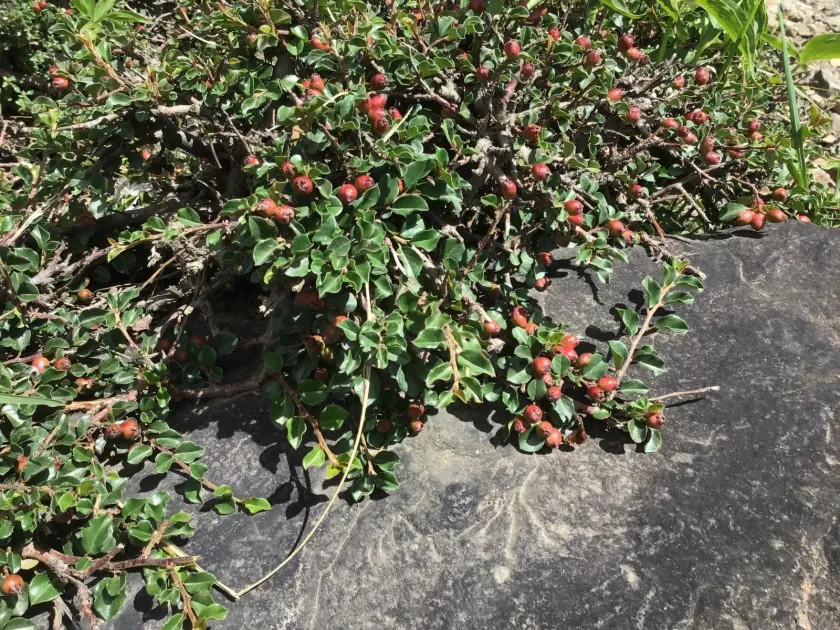
Its primary agricultural and ornamental use is in landscape design, specifically for rock gardens, embankment planting, and borders. The aesthetic appeal of its small, wavy-edged leaves and brilliant red berries makes it a top choice for seasonal interest throughout the autumn.
Main diseases and pests
Common pathological issues include powdery mildew and fire blight. Ensuring adequate air circulation between plants is the most effective cultural method to prevent the spread of fungal spores in humid environments.
Pest management focuses on monitoring for aphids, spider mites, and scale insects. If infestations occur, horticultural oils or targeted systemic insecticides should be applied according to the stage of plant development.