
Tengyueh cotoneaster
Cotoneaster tengyuehensis
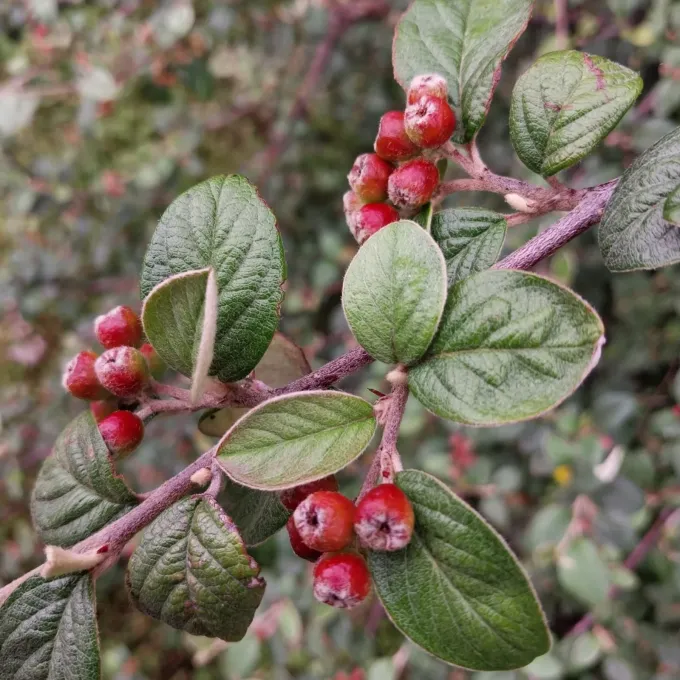
Description
Growing requirements
The Tengyueh cotoneaster (Cotoneaster tengyuehensis) is an ornamental, semi-evergreen shrub belonging to the Rosaceae family. It is native to the Yunnan province of China, thriving in mountainous, temperate environments.
The plant is distinguished by its arching stems, glossy dark green foliage, and small white flowers that appear in late spring. By autumn, it produces vibrant red berries that provide winter interest in garden settings.
This shrub prefers sunny to partially shaded locations with fertile, well-draining soil. It is adaptable to various soil types but cannot tolerate waterlogged conditions, which may lead to root rot.
In terms of climate, it performs best in regions with mild winters. While it has some tolerance to cold, protecting young specimens from severe frost and wind is recommended to ensure successful establishment.
Landscape applications include planting for hedges, foundation screens, or erosion control on banks. Due to its dense growth habit, it is an excellent candidate for providing both privacy and aesthetic value.
Main diseases and pests
Common plant health issues include fire blight, a bacterial disease that causes rapid wilting of leaves and stems. Affected areas should be pruned and destroyed immediately to prevent spread.
Powdery mildew is a frequent concern during humid or damp conditions. It appears as a white, dusty layer on leaves, which can be managed with sulfur-based fungicides and proper canopy management.
Pests such as aphids and spider mites can infest the foliage, particularly during dry spells. These pests suck the plant's sap, which can cause stunted growth if not treated with appropriate horticultural oils.
Good air circulation is essential for maintaining the health of the shrub. Pruning should be performed in late winter or early spring to remove dead wood and open up the center of the plant.
Maintaining balanced soil nutrition and avoiding excessive nitrogen fertilization helps prevent soft, succulent growth that is more susceptible to insect infestations and disease outbreaks.