
Simons cotoneaster
Cotoneaster simonsii
Description
Growing requirements
Simons cotoneaster (Cotoneaster simonsii) is an ornamental deciduous to semi-evergreen shrub belonging to the Rosaceae family. Originating from the mountainous regions of the Himalayas, it has become a popular choice for gardens globally due to its hardiness.
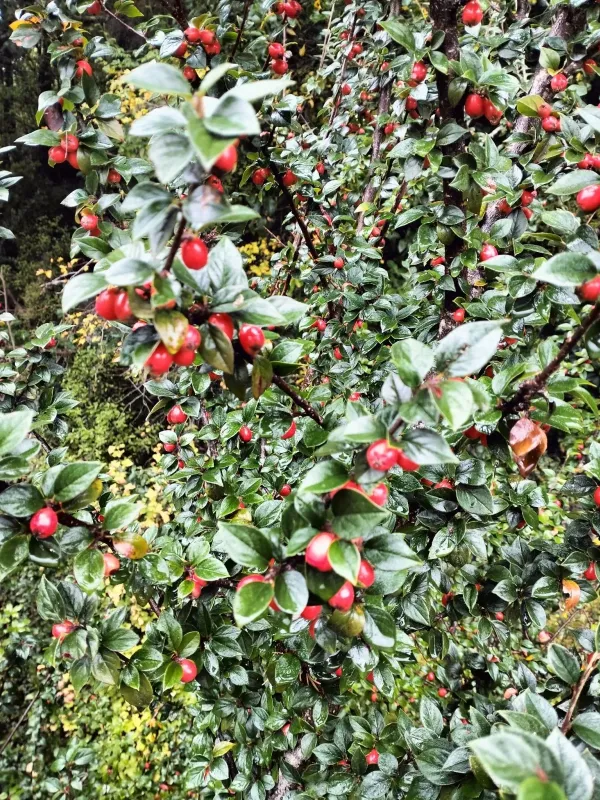
The plant features upright, rigid branches that can reach a height of up to three meters. Its foliage is composed of oval-shaped, deep green leaves, which often display a glossy texture, providing a lush appearance throughout the growing season.
This shrub thrives in well-drained, fertile soil and prefers positions that receive full sun or light dappled shade. It is highly adaptable to various soil types, provided that the growing medium does not remain waterlogged for extended periods.
In terms of climate, it is fairly resilient, though it performs best in temperate environments where it is protected from extreme winter desiccation. Regular pruning is necessary to maintain the desired shape and to encourage the growth of denser, more vibrant foliage.
In landscape architecture, Simons cotoneaster is primarily utilized for hedging and screening. Its dense growth habit makes it an excellent candidate for formal hedges, while its autumn berries provide an additional aesthetic layer, attracting local bird species.
Main diseases and pests
Fire blight is the most significant disease affecting this species, capable of damaging branches and, in severe cases, the entire plant structure. Preventive measures include choosing resistant cultivars and pruning during dry weather to minimize infection risks.
Common pests include aphids and mites, which primarily target the succulent new growth of the plant. A proactive approach, including manual cleaning or the application of horticultural oils, is often sufficient to keep the shrub healthy and infestation-free.