
Late cotoneaster
Cotoneaster serotinus
Description
Growing requirements
Late cotoneaster (Cotoneaster serotinus) is a robust evergreen or semi-evergreen shrub belonging to the Rosaceae family. Native to the southwestern regions of China, this species is highly valued in horticulture for its elegant growth habit and persistent foliage.
The plant thrives in well-drained, fertile soil with a neutral to slightly acidic pH. It performs best in full sun to partial shade, though sufficient exposure to light is crucial for stimulating abundant flowering and subsequent fruit production in the autumn.
Climatic requirements involve moderate temperate zones. While the species is relatively hardy, it appreciates protection from harsh, desiccating winds in winter. Consistent irrigation is required for young plants, whereas established shrubs demonstrate moderate drought tolerance.
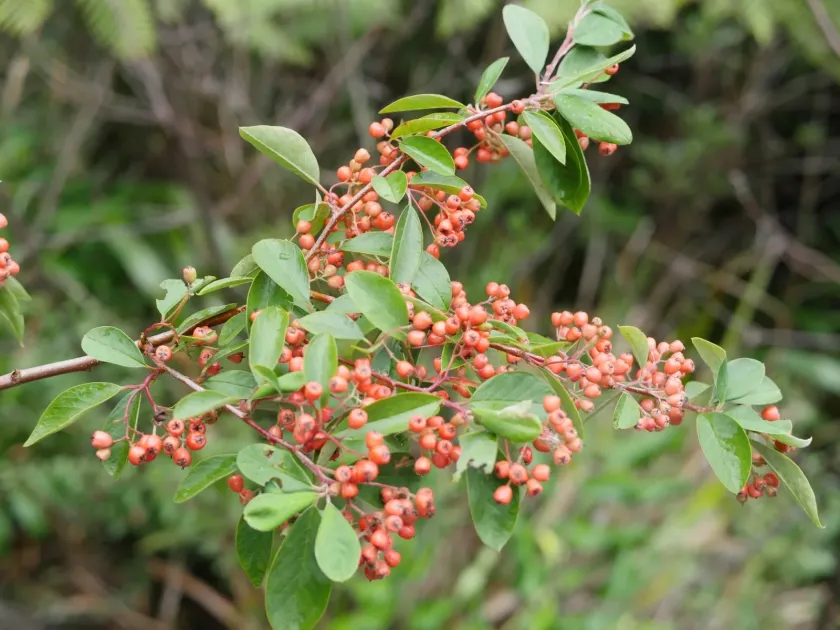
Botanical characteristics include arching branches and glossy, elliptical leaves that provide year-round visual interest. In mid-summer, the plant produces clusters of small white flowers, which are followed by numerous red berries that remain on the branches into the late season.
This shrub is extensively used in landscape design for creating hedges, foundation plantings, or as a dense ground cover on slopes. Its versatility and ability to withstand periodic pruning make it a popular choice for both urban and residential gardens.
Main diseases and pests
The most common disease affecting this shrub is powdery mildew, which manifests as a white, dusty fungal growth on leaves and stems. This condition is often encouraged by high humidity and poor air circulation within the shrub canopy.
Pests such as aphids and spider mites can colonize the soft tissue of new growth, causing leaf curling and reduced vigor. Monitoring is essential, especially during dry spells, as early detection allows for effective management using organic insecticidal soaps.
Fire blight, a severe bacterial disease targeting the Rosaceae family, can pose a significant risk. Symptoms include wilted, blackened twigs that appear scorched; such growth must be pruned back into healthy wood and discarded immediately.
Root rot is frequently associated with waterlogged soils or excessive irrigation. Ensuring a proper drainage system is the primary agricultural preventative measure to maintain plant health and prevent the decay of the root system.
Maintenance practices such as thinning the canopy to improve airflow and clearing debris from the base of the plant significantly lower the incidence of common fungal and insect outbreaks throughout the growing cycle.