
Willow-leaved cotoneaster
Cotoneaster salicifolius
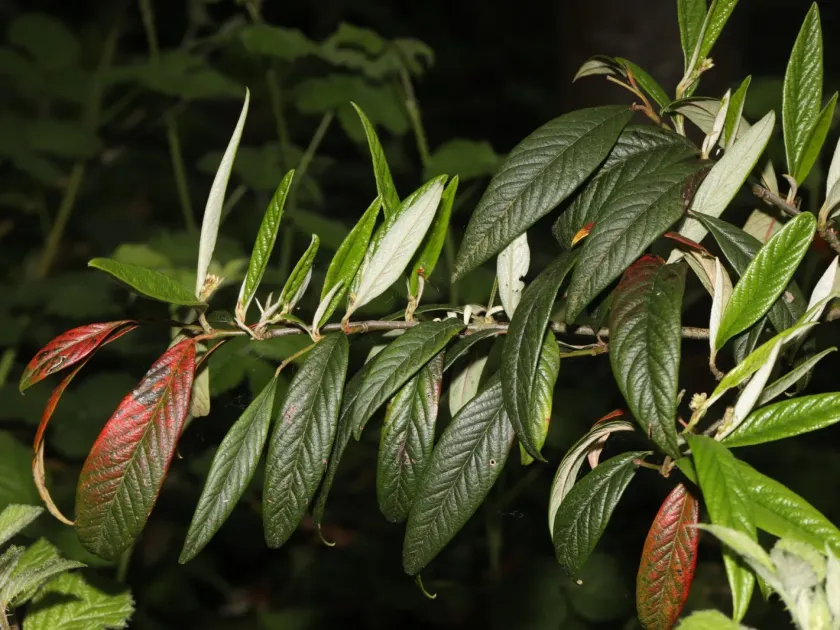
Description
Growing requirements
Willow-leaved cotoneaster (Cotoneaster salicifolius) is an evergreen to semi-evergreen shrub belonging to the Rosaceae family. Originally from Western China, this species is highly valued for its elegant, arching branches and foliage that closely resembles that of a willow tree.
The plant is widely used in commercial landscaping for ground cover, hedges, and ornamental borders. Its ability to produce clusters of small white flowers followed by bright red berries makes it a top choice for seasonal visual interest throughout the autumn and winter months.
Regarding site requirements, the shrub thrives in full sun but can tolerate partial shade. For optimal health, the location should provide good air circulation to prevent moisture accumulation within the dense canopy of the shrub.
Soil requirements are relatively flexible, provided that the drainage is excellent. It performs best in well-drained loamy or sandy soils. Waterlogging should be avoided at all costs, as the root system is highly susceptible to rot in oxygen-depleted soil conditions.
The species is moderately cold-hardy and is best suited for temperate climates. In colder regions, providing winter protection in the form of organic mulch or frost blankets can significantly improve survival rates during severe freezing events.
Main diseases and pests
Fire blight is a significant bacterial disease that can affect this species, causing scorched-looking foliage and dead branches. Pruning infected material well back into healthy wood and sterilizing tools between cuts are standard containment measures.
Aphids are the most frequent insect pests, often attacking the tender new growth during spring. Horticultural oils or insecticidal soaps are usually sufficient to manage these populations without causing long-term damage to the shrub.
Scale insects can attach themselves to the stems, causing stunted growth and yellowing of leaves. Regular monitoring during the dormant season allows for the application of dormant oils to suffocate overwintering larvae effectively.
Powdery mildew may occur during seasons with high humidity and stagnant air. Keeping the shrub properly thinned through regular pruning helps improve airflow and reduces the likelihood of fungal outbreaks significantly.
A rigorous maintenance schedule, including correct irrigation practices and avoiding over-fertilization with nitrogen, helps keep the shrub vigorous and resilient against typical botanical threats.