
Wrinkled-leaf cotoneaster
Cotoneaster rhytidophyllus
Description
Growing requirements
The wrinkled-leaf cotoneaster (Cotoneaster rhytidophyllus) belongs to the Rosaceae family. Native to the mountainous regions of China, this evergreen or semi-evergreen shrub is prized for its slow-growing, dense habit, making it an ideal candidate for formal hedges and structural plantings in temperate climates.
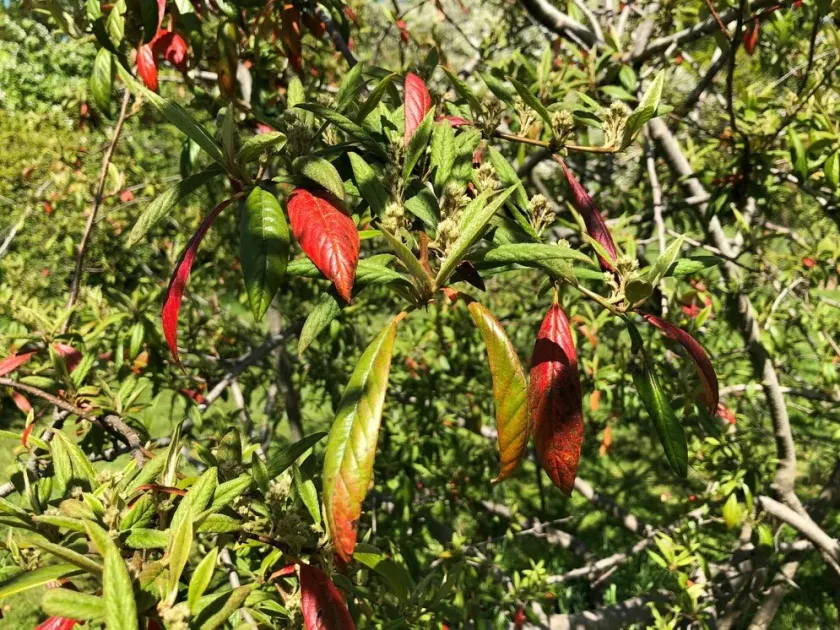
The species is distinguished by its unique foliage, which features deeply rugose, wrinkled upper surfaces and dense, woolly-tomentose hairs on the undersides. Small white flowers emerge in clusters during late spring, followed by persistent, bright red pome fruits that provide significant winter interest in the garden landscape.
Regarding climate, the plant thrives in full sun to partial shade. It is generally hardy, though it benefits from shelter in areas with extreme winter winds. It adapts well to various settings, showing notable tolerance for urban environments, including moderate levels of pollution, which enhances its versatility.
The soil requirements are flexible, though the species performs best in well-drained, fertile loamy or sandy soils. It is highly intolerant of waterlogged conditions, which can lead to root rot; therefore, providing an effective drainage layer during initial planting is essential for long-term health and vigor.
In landscaping, Cotoneaster rhytidophyllus is utilized as a standalone specimen or in mass plantings to provide year-round texture. Its ability to withstand frequent pruning makes it an excellent choice for creating dense, evergreen screens or low-maintenance hedges that stabilize soil on embankments and slopes.
Main diseases and pests
Common health issues include fungal infections such as powdery mildew, which can thrive in stagnant air conditions. Proper spacing and thinning out of internal branches are crucial to ensure adequate airflow, which is the most effective cultural method for preventing the onset of these diseases.
In terms of pests, the shrub is susceptible to various aphids and spider mites. These pests primarily attack the soft tissue of developing shoots, causing visible deformation and chlorosis. Monitoring during the early growth stages is necessary to catch infestations before they cause significant damage.
Sanitation plays a vital role in pest and disease management. Removing infected plant debris from the base of the shrub helps reduce the overwintering population of harmful insects and the concentration of fungal spores that could re-infect the plant in the following growing season.
Chemical control should be employed judiciously. Systemic insecticides or fungicides should be applied only when necessary and during non-flowering periods to protect beneficial pollinators such as honeybees and other insects that are attracted to the flowers of the cotoneaster.
General vigor is the best defense against threats. Providing the plant with appropriate nutrients, maintaining consistent moisture levels during drought, and ensuring optimal sunlight exposure helps the plant maintain high immunity, making it more resilient against environmental stresses and biological pests.