
Creeping cotoneaster
Cotoneaster radicans
Description
Growing requirements
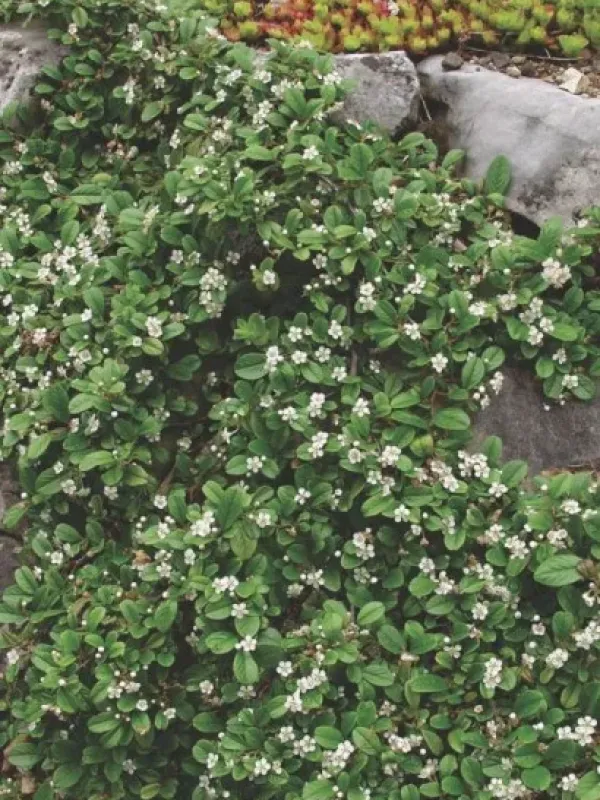
Creeping cotoneaster belongs to the Rosaceae family. It is a dense, mat-forming, evergreen or semi-evergreen shrub, highly valued for its creeping branches that can take root where they touch the soil, creating a thick green mat.
Originating from parts of Asia, this plant is well-adapted to rocky slopes and mountain regions. It is characterized by its high adaptability, thriving in a variety of environmental conditions ranging from full sun to partial shade.
The plant requires well-drained soil and is tolerant of a wide range of soil types, including poor or rocky substrates. While it is quite drought-tolerant once established, regular irrigation during the first growing season is crucial for successful development.
Maintenance is minimal, consisting primarily of spring pruning to remove any dead or damaged stems. This helps maintain a neat appearance and encourages the growth of fresh foliage throughout the summer months.
Hardiness is one of its main advantages, as the plant can withstand freezing temperatures, making it an excellent choice for ground coverage, erosion control on embankments, and rock garden design in various climatic zones.
Main diseases and pests
The plant is susceptible to several fungal diseases, primarily powdery mildew, which appears as a white coating on the leaves. Good air circulation and avoiding overhead watering can significantly reduce the risk of this infection.
Pests such as aphids and scale insects are common problems that can weaken the shrub. Regular monitoring of the foliage and stems allows for early detection and treatment with appropriate horticultural oils or systemic insecticides.
Fire blight is another serious concern, causing leaves and branches to wilt and turn brown. Infected parts should be pruned back to healthy wood, with tools disinfected between cuts to prevent spreading the pathogen to other parts of the garden.
Soil-borne pathogens like Phytophthora can affect roots if the soil remains waterlogged for extended periods. Ensuring proper soil structure and drainage is the most effective preventative measure against root rot issues.
Maintaining a clean garden bed by removing leaf litter and debris reduces the overwintering sites for various pests. Consistent care ensures the plant remains vigorous and capable of resisting typical garden stresses.