
Raceme cotoneaster
Cotoneaster racemiflorus
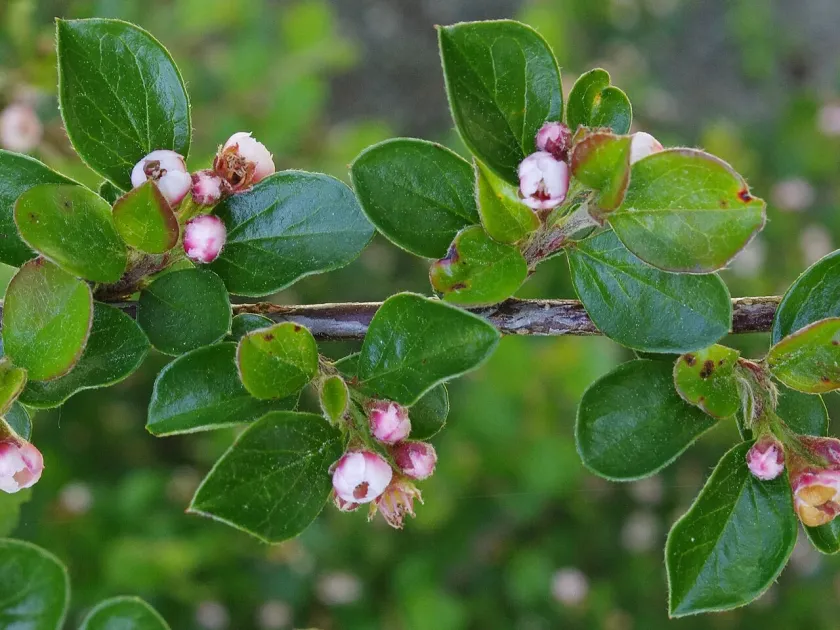
Description
Growing requirements
Raceme cotoneaster (Cotoneaster racemiflorus) is a robust deciduous shrub belonging to the Rosaceae family. Native to Central and Western Asia, this plant has adapted to diverse environments, typically thriving on stony slopes and in woodland clearings.
The plant typically grows as a medium-sized shrub reaching 2 to 3 meters in height. Its botanical characteristics include small, ovate, gray-green leaves and clusters of white, fragrant flowers that appear in early summer, eventually developing into bright red fruits.
Regarding climatic requirements, this species is highly versatile. It prefers full sun exposure to ensure maximum fruit production and a healthy growth habit, though it can tolerate partial shade. It is well-known for its exceptional winter hardiness, making it suitable for temperate climates.
In terms of soil, it is not particularly demanding but thrives best in well-drained, slightly alkaline, or neutral soils. Poor drainage is the most significant limiting factor, as it can cause root rot, making site selection with adequate drainage essential for long-term health.
Agrotechnical care is relatively straightforward. The shrub responds well to pruning, which can be done in late winter to maintain its shape. Drought tolerance is high once the root system is well-established, reducing the need for constant supplemental irrigation.
Main diseases and pests
While generally hardy, the plant is susceptible to common Rosaceae pests, such as aphids and spider mites. These pests tend to target new growth, causing leaf curling and reduced plant vigor. Early intervention with suitable insecticides is recommended to manage populations.
Fungal diseases like powdery mildew are common in humid conditions or areas with poor air circulation. Symptoms include a white powdery residue on leaves. Ensuring proper spacing during planting is a primary preventative measure to minimize the risk of infection.
Bacterial issues, such as fire blight, can occasionally occur. Symptoms often involve blackened leaves or branches that appear scorched. Affected areas must be pruned and disposed of carefully, with tools disinfected after every cut to prevent cross-contamination.
The economic and practical use of this species is primarily focused on landscaping. Its deep and extensive root system makes it an excellent choice for soil erosion control on steep banks, while its ornamental value makes it popular for hedge construction.
The small red fruits provide a vital food source for avian populations during the late autumn and winter months. Furthermore, the dense branching habit of the mature shrub provides ideal nesting cover for small birds, enhancing local biodiversity.