
Nanshan Cotoneaster
Cotoneaster nanshan
Description
Sowing dates
The Nanshan Cotoneaster (Cotoneaster nanshan) is a low-growing, evergreen to semi-evergreen shrub belonging to the Rosaceae family. Originally native to the mountainous regions of China, this plant has adapted to thrive in rocky, challenging environments with significant temperature fluctuations.
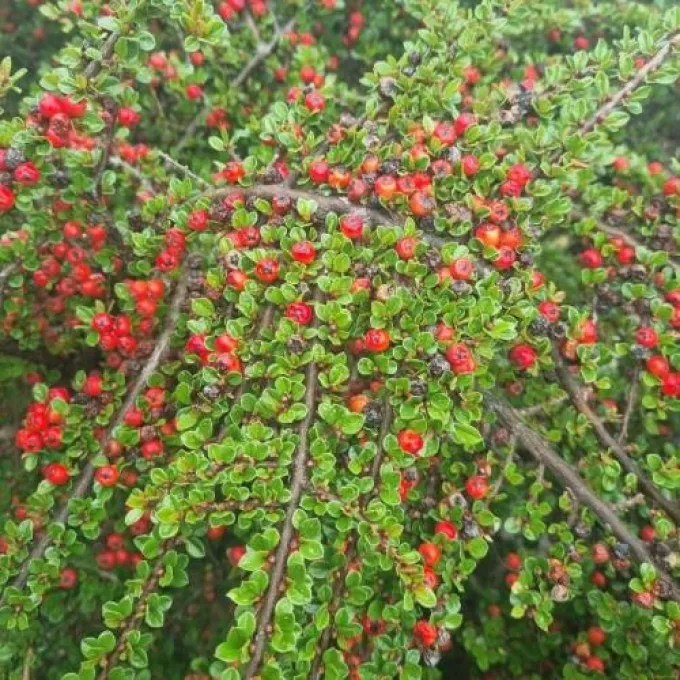
In landscaping, this species is highly valued as a groundcover plant, capable of spreading rapidly to create a dense, low-profile mat of small, dark green, glossy leaves. Typically reaching a height of only 20 to 40 centimeters, its flexible branches can extend over large areas, rooting firmly into the soil wherever they make contact.
The plant produces small white or slightly pinkish flowers in late spring or early summer, which serve as a magnet for pollinators. These blossoms eventually transform into abundant, bright red berries that remain on the branches through the winter, providing excellent decorative interest during the dormant season.
The root system of the Nanshan Cotoneaster is shallow yet highly branched, making it an ideal choice for stabilizing slopes and preventing soil erosion. Its vigorous growth habit allows it to quickly cover large surfaces, effectively outcompeting most weeds in the surrounding area.
Common uses for the Nanshan Cotoneaster include landscape design, urban ground stabilization, and the creation of borders in rock gardens. Its ability to tolerate regular pruning and its low-maintenance nature make it a preferred plant for both public park projects and private residential gardens.
Growing requirements
The Nanshan Cotoneaster performs best when planted in full sun, though it is capable of thriving in partial shade while maintaining its dense foliage density. Proper soil drainage is critical, as stagnant water in the root zone can trigger various fungal issues that are detrimental to the plant's health.
While the species is highly drought-tolerant once established, it requires consistent watering during its first growing season to develop a robust root system. Once mature, it can withstand occasional dry spells without showing significant signs of stress.
The plant is not particularly demanding regarding soil composition, though it prefers light, well-draining sandy or loamy soils with a neutral to slightly alkaline pH. If planted in dense clay, it is highly recommended to incorporate gravel or coarse sand into the hole to ensure adequate drainage.
Regarding climate, this cotoneaster is quite hardy, capable of surviving moderate winter freezes. In regions experiencing harsh winters without snow cover, it is advisable to apply a layer of mulch around the base of the plant to protect the surface roots from extreme temperature fluctuations.
Maintenance includes light pruning in early spring to remove dead or damaged branches, which helps to keep the shrub looking tidy. Because it responds very well to trimming, it can be easily shaped or kept within specific boundaries depending on the design requirements of the garden.
Main diseases and pests
Fungal diseases represent the most significant threat to the Nanshan Cotoneaster, particularly in areas with poor drainage or high humidity. Fusarium wilt can affect the vascular system of the shrub, leading to premature dieback of the branches if proper moisture management is ignored.
Powdery mildew may also occur, manifesting as a white, dusty layer on the leaves, which hinders photosynthesis. Ensuring proper airflow through regular pruning and maintaining the appropriate distance between individual plants significantly reduces the risk of this infection.
Aphids are the most common pests, frequently targeting young, tender growth during the spring. Their feeding can cause foliage to curl and stunt the overall development of the shrub, requiring prompt intervention with soaps or systemic insecticides if populations get out of control.
Occasionally, scale insects or spider mites can infest the plant, particularly in hot and dry weather conditions. Regular inspection of the undersides of leaves and branch junctions allows for early detection and targeted treatment, minimizing the need for heavy pesticide applications.
- Monitor for signs of pest activity during the spring flush.
- Remove any diseased or broken branches immediately to prevent spread.
- Use copper-based fungicides as a preventative measure in high-humidity seasons.