
Hjelmqvist cotoneaster
Cotoneaster hjelmqvistii
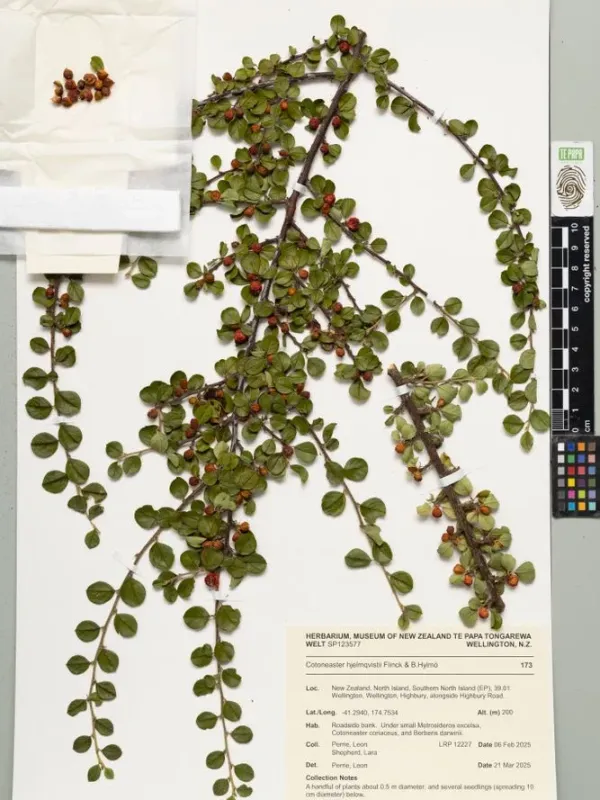
Description
Growing requirements
The Hjelmqvist cotoneaster is a deciduous perennial shrub belonging to the Rosaceae family. Known for its spreading habit and dense branch structure, it is a highly valued species for various landscaping applications, ranging from ornamental hedging to ground covering.
This shrub demonstrates significant cold hardiness, making it suitable for cultivation across various temperate climate zones. While it thrives in full sun, it shows a remarkable degree of tolerance for partial shade, maintaining a healthy appearance even in less than ideal lighting conditions.
The species prefers well-drained loamy or sandy soils and is quite adaptable to different soil types, provided that waterlogging is prevented. Proper soil drainage is essential for the long-term health of the plant, as stagnant water can severely impact its root system.
Agricultural management involves regular pruning to maintain the desired shape and promote healthy, dense growth. While the plant is drought-tolerant once established, supplemental irrigation during extreme heatwaves will significantly improve its vitality and leaf condition.
Host use of the Hjelmqvist cotoneaster includes slope stabilization and the creation of aesthetic barriers. Its resilient root system is particularly useful for erosion control, ensuring stability for embankments while simultaneously providing high ornamental value to the landscape.
Main diseases and pests
Common diseases affecting this shrub include powdery mildew and various fungal leaf spots, which typically occur in environments with poor air circulation or excessive ambient humidity during the growing season.
Pests such as aphids, scale insects, and spider mites can occasionally cause damage to tender shoots and leaves. Integrated pest management, including regular inspection and the timely application of systemic pesticides, is recommended for effective control.