
Henry's Cotoneaster
Cotoneaster henryanus
Description
Growing requirements
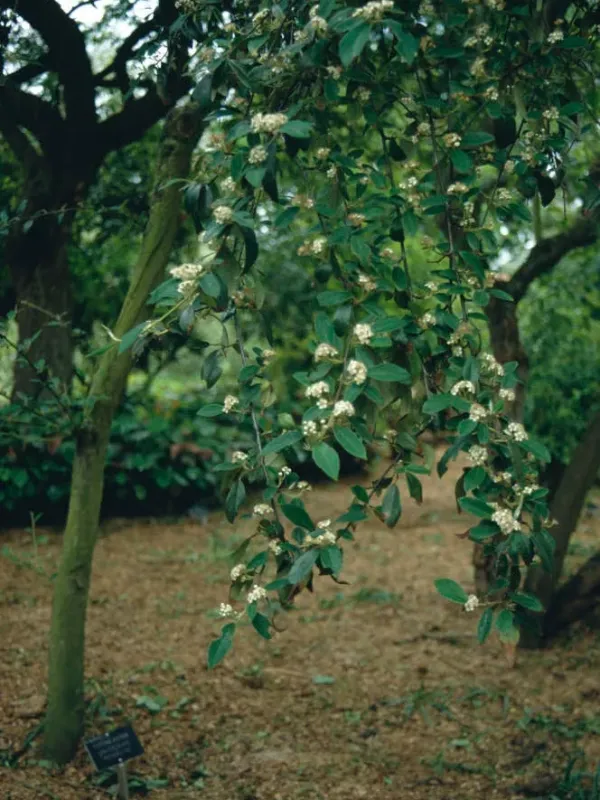
Henry's Cotoneaster (Cotoneaster henryanus) is a striking evergreen or semi-evergreen shrub belonging to the Rosaceae family. Native to China, this species is widely appreciated in temperate climates for its elegant arching branches and year-round aesthetic appeal.
The plant thrives best in sunny locations or partial shade. It requires well-drained soil, as it is sensitive to waterlogging which can lead to root damage. It performs exceptionally well in moderately fertile soil conditions with a neutral to slightly alkaline pH.
Botanically, it is characterized by its elongated, dark green, glossy leaves and long, sweeping stems. In early summer, the shrub produces clusters of small white flowers that add a delicate contrast to the foliage.
By late summer and autumn, the plant is adorned with numerous bright red berries, which serve as a food source for birds and enhance the shrub's decorative value until late winter. Mature specimens can reach heights of up to 4 meters.
In terms of maintenance, this cotoneaster is relatively low-demanding once established. It responds well to pruning, which helps maintain its shape and encourages denser foliage growth, making it a popular choice for informal hedges and shrub borders.
Main diseases and pests
Like many species in the Rosaceae family, Henry's Cotoneaster is susceptible to fire blight and powdery mildew. Proper air circulation and avoiding overhead watering are essential preventative practices to keep these diseases at bay.
Pests such as aphids and spider mites can occasionally affect the shrub. Regular monitoring of the underside of leaves during the spring and early summer allows for early intervention using horticultural soaps or appropriate pesticides.
Root rot is a common issue if the soil remains excessively moist. Ensuring proper drainage at the planting site is the most effective way to prevent fungal pathogens from settling in the root zone.
Sanitary pruning is critical for managing potential outbreaks. Removing any branches that show signs of wilting or discoloration helps protect the overall health of the shrub and prevents the spread of spores.
Applying a balanced fertilizer in the early spring can significantly boost the plant's natural resistance to pests and diseases. This care routine helps ensure that the shrub remains vigorous and maintains its lush appearance throughout the growing season.