
Coral aloe
Aloe striata Haw.
Description
Growing requirements
Coral aloe (Aloe striata Haw.) is a perennial succulent plant belonging to the Asphodelaceae family. Native to the arid regions of South Africa, it thrives in rocky, well-drained soils where competition for water is high.
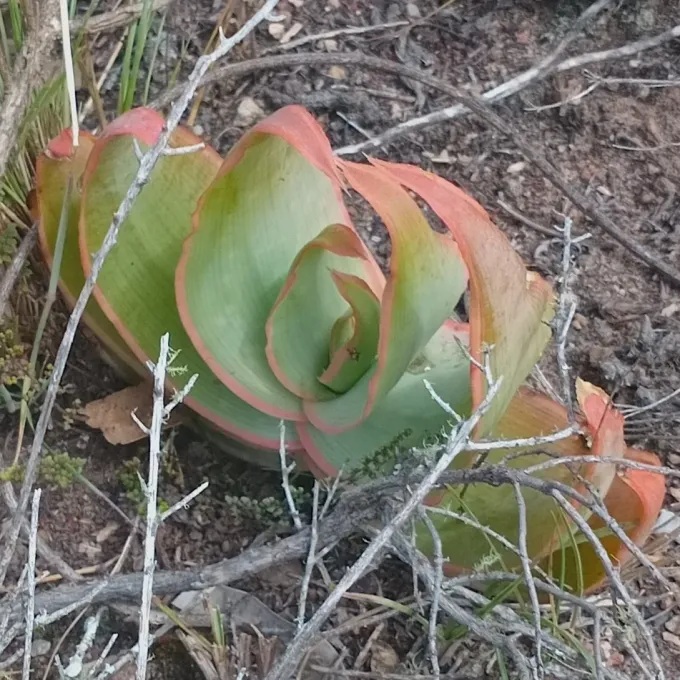
The plant is distinguished by its broad, smooth leaves that lack the typical teeth found in other aloe species. The foliage is gray-green with a distinct pink or reddish margin, and the plant produces tall, showy coral-colored flower spikes during the blooming season.
To cultivate Aloe striata successfully, one must provide intense sunlight exposure. This succulent requires a bright, well-ventilated environment to maintain its compact, symmetrical shape and to avoid etiolation caused by low light levels.
Soil requirements are strict regarding drainage. A gritty, mineral-heavy substrate is essential, often composed of coarse sand, pumice, and perlite, which ensures that moisture never lingers around the root neck of the plant.
The primary use of this species is ornamental. It is widely prized by landscape designers in frost-free regions and by indoor succulent enthusiasts who appreciate its year-round structural interest and vibrant spring floral display.
Main diseases and pests
The most significant threat to Coral aloe is root rot caused by overwatering or poorly draining soil. When the substrate remains wet for extended periods, the plant’s roots deteriorate quickly, often resulting in total collapse.
Pest management should focus on common succulent invaders like mealybugs. These insects often cluster in the tight leaf rosettes, where they are protected, necessitating the use of systemic insecticides or targeted topical treatments.
Scale insects are another common problem that can sap the plant's vigor. They appear as small, hard brown bumps on the leaves and must be managed by removing them manually or applying horticultural oils to suffocate the pests.
Spider mites may become an issue in indoor environments with low humidity. Infestations lead to fine webbing and mottled foliage, which can be mitigated by increasing local humidity or using specialized miticides.
Proper hygiene is vital for maintaining healthy specimens. Removing dead basal leaves helps prevent damp areas where fungal spores and pests can proliferate, ensuring the long-term vitality of the aloe plant.