
Copernicia yarey
Copernicia yarey
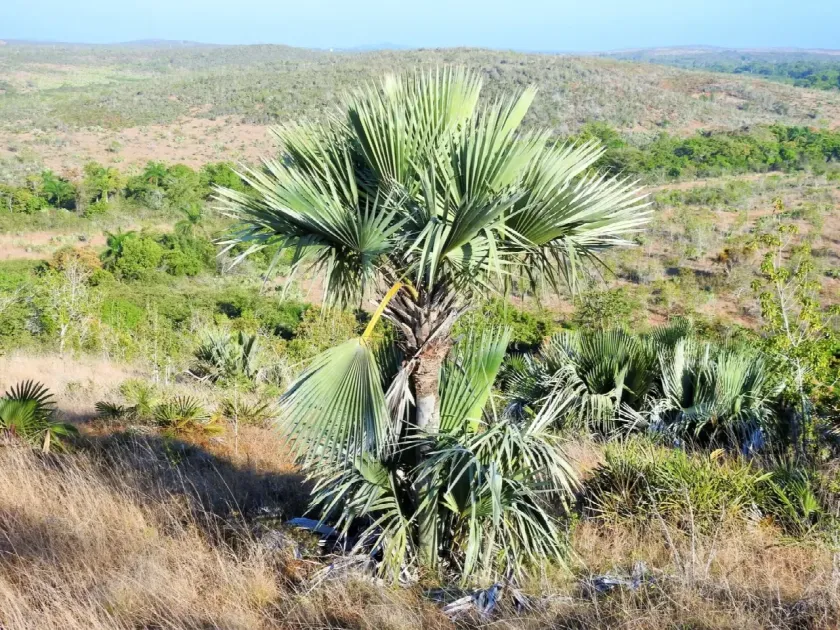
Description
Growing requirements
Copernicia yarey is a distinctive palm species belonging to the Arecaceae family. Native to the island of Cuba, this plant thrives in savannah-like landscapes and is highly specialized for survival in harsh, nutrient-poor soil conditions.
This species is strictly heliophilous, requiring full sun exposure throughout its life cycle. It is adapted to a tropical climate where high temperatures are persistent, and it cannot tolerate frost or prolonged freezing temperatures.
Regarding soil preferences, Copernicia yarey prefers well-drained substrate, often growing on limestone or sandy soils. It demonstrates remarkable resilience to drought, a trait essential for its survival in seasonal tropical environments.
Cultivation practices primarily involve site selection that provides adequate drainage and protection from aggressive invasive plants. Planting schemes are designed to mimic natural density to ensure uniform growth and light capture.
Although it is primarily a wild-harvested resource, modern agricultural efforts focus on sustainable management. This includes monitoring the health of the growth point to ensure that the palm remains productive over many years.
Harvesting
The primary economic value of Copernicia yarey lies in the harvesting of its leaf wax. This natural wax is secreted by the plant as a protective layer, allowing the palm to minimize water loss under intense tropical heat.
Harvesting involves the manual cutting of mature fronds. Farmers must be highly skilled to prune the leaves correctly, ensuring that the plant's central growing bud remains undamaged for continuous leaf regeneration.
The harvested fronds are dried in the sun to ensure that the waxy coating hardens effectively. Once dried, mechanical beating or scraping methods are used to extract the waxy scales from the surface of the leaflets.
The resulting wax is a premium industrial product, highly sought after for its high melting point and hardness. It is widely used in the manufacturing of specialty coatings, waxes, and high-end automotive care products.
Sustainable harvesting cycles are crucial. By managing the number of fronds harvested per year, producers can ensure the long-term viability of the palm stands while maximizing the yield of raw materials for industrial processing.