
Carnauba wax palm
Copernicia prunifera
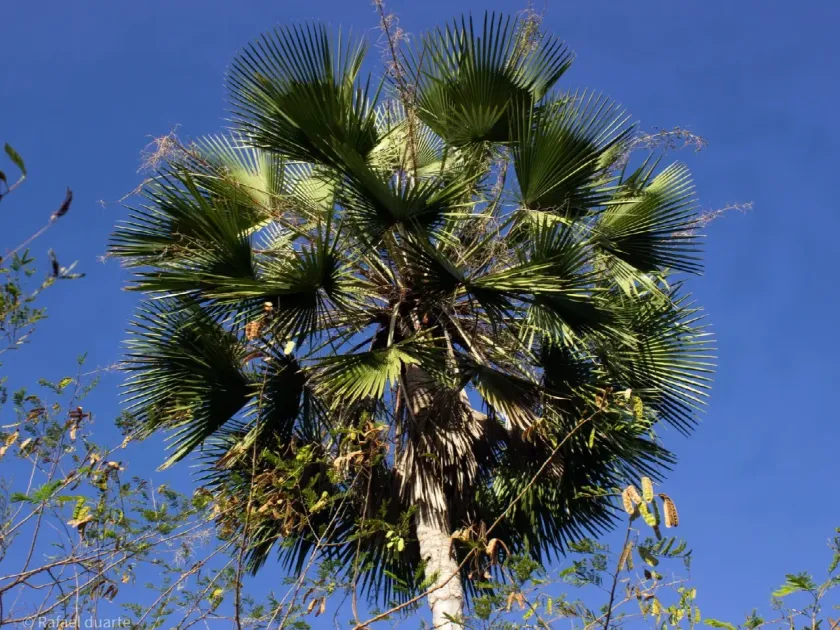
Description
Sowing dates
The Carnauba wax palm, or Copernicia prunifera, is propagated primarily through seeds which must be sourced from high-quality, mature mother trees.
Seed germination requires consistent tropical warmth and high moisture levels; therefore, nurseries are typically used to protect seedlings during their early, vulnerable stages.
Transplanting to the field is performed once the plant has developed a robust root system and sufficient foliage to withstand fluctuating environmental conditions.
Strategic spacing is essential to ensure that each palm receives adequate sunlight and nutrient access from the soil as it matures into a full-grown tree.
Planting efforts are ideally timed with the onset of the rainy season to provide the necessary hydration for the young palms to establish themselves firmly in the soil.
Growing requirements
This palm species is native to northeastern Brazil, demonstrating remarkable adaptation to the specific harsh climate of this semi-arid region.
It flourishes in deep, alluvial soils often found near riverbeds, yet it possesses a unique ability to thrive in poor or saline soil conditions where other crops fail.
The palm is heliophilic, meaning it requires intense, direct sunlight to sustain its metabolic processes and the production of its famous protective wax coating.
It is highly resistant to heat, but sensitive to cold, making it exclusive to tropical regions that do not experience freezing temperatures at any time of the year.
The species is known for its drought tolerance, which is facilitated by the thick, waxy cuticle on its fan-shaped leaves, effectively preventing water loss.
Yield
The primary yield from this crop is carnauba wax, a natural substance harvested from the surface of the palm's leaves during the dry season.
Yield efficiency is directly linked to the age of the tree and the severity of the drought; the drier the weather, the more wax the plant secretes as a protective barrier.
Once processed, the wax is widely used in high-end applications, including cosmetics, food coatings, pharmaceuticals, and automotive polishes due to its high melting point.
Beyond the wax, the tree provides timber for construction and fibers used in local handicrafts, providing a multi-functional resource for regional economies.
Sustainable harvesting techniques allow for consistent yields over decades, as the palm is capable of continuous foliage regeneration if managed correctly.
Main diseases and pests
One of the most significant agricultural threats to Copernicia prunifera is the infestation of palm weevils that bore into the trunk, destroying the apical meristem.
Fungal pathogens can compromise leaf quality during the drying process, particularly if the humidity levels in the storage area are not adequately controlled.
Overgrazing by local livestock in young plantations poses a risk, as animals can severely damage the foliage and impede the growth of the palm trees.
Changes in agricultural practices, such as excessive pesticide use in nearby crops, can disrupt natural biological control agents, leading to pest outbreaks.
Prolonged waterlogging, although the plant is tolerant to some moisture, can eventually lead to root rot if the drainage capacity of the site is completely insufficient.
Harvesting
The harvest involves the selective manual cutting of leaves, a process that requires skill to ensure the vitality of the palm is preserved for future growth.
After collection, the leaves are bundled and spread in open areas to sun-dry, which causes the wax to harden into a dust that can be beaten off the leaf surface.
Efficiency in harvesting is increased by scheduling the cuts to coincide with the periods of maximum wax deposition, typically at the end of the dry season.
Modern processing facilities have improved the purity and quality of the final wax product, ensuring it meets international standards for industrial use.
Strict management of the harvest cycle is required to prevent over-exploitation, ensuring that each tree maintains enough leaf surface for photosynthesis throughout the year.