
Carnauba wax palm
Copernicia alba
Description
Growing requirements
The Carnauba wax palm (Copernicia alba), a member of the Arecaceae family, is a resilient species native to the Gran Chaco region of South America. It is evolutionarily adapted to survive in environments characterized by extreme drought alternating with periods of seasonal flooding.
The plant thrives in open, sun-exposed areas and is remarkably tolerant of clay-rich, heavy soils that would be unsuitable for most other palm species. Its ability to tolerate challenging soil chemistry makes it a valuable resource for land reclamation.
Temperature requirements are strictly tropical, as the species is highly intolerant of frost. Stable temperatures between 25 and 35 degrees Celsius are ideal for ensuring consistent growth and optimal wax production.
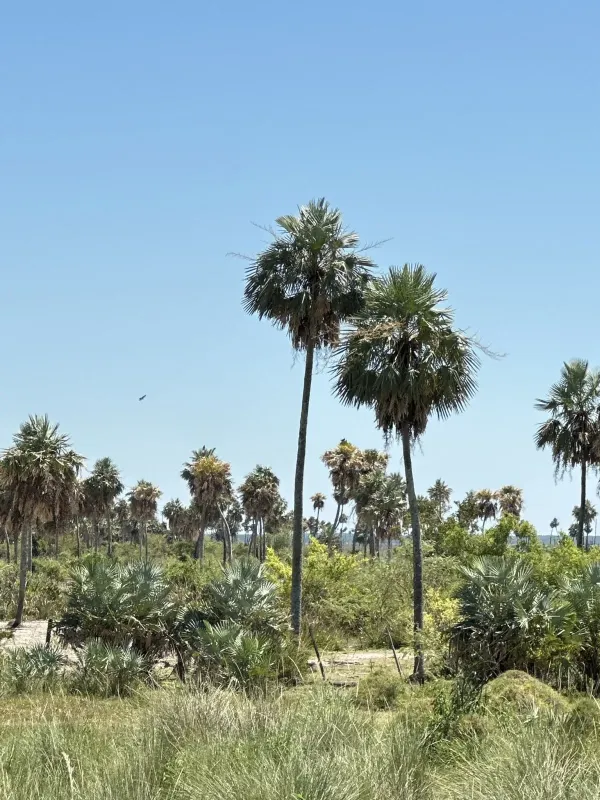
Botanically, it features a sturdy, straight trunk topped with a crown of stiff, fan-shaped leaves. These leaves are covered in a dense, powdery layer of natural wax, which acts as a protective mechanism against dehydration.
Management practices for commercial stands include controlled spacing to maximize photosynthesis and manual cleaning of the trunks to encourage vigorous canopy development. Irrigation is typically not required once the trees are established.
Harvesting
The primary economic value of the species lies in the extraction of carnauba wax. Harvesting involves cutting the mature fan-shaped leaves during the dry season, which is the period of peak wax concentration.
Once harvested, the leaves are spread out to dry in the sun, causing the protective wax layer to crack and flake off. The material is then processed through mechanical beaters and refined to achieve the desired purity level.
The applications for the wax are vast, ranging from automotive and furniture polishes to food additives and cosmetic binders. The wood of the palm is also harvested for rural construction due to its high density and rot resistance.
Productivity is managed by rotating harvest cycles, ensuring that each palm is not stripped of more than one-third of its foliage in a single season. This sustainable practice preserves the tree's long-term health.
With an increasing global demand for natural, renewable materials, the Carnauba wax palm remains a key agricultural asset for tropical regions, balancing industrial needs with agricultural conservation.