
Copernicia ekmanii
Copernicia ekmanii
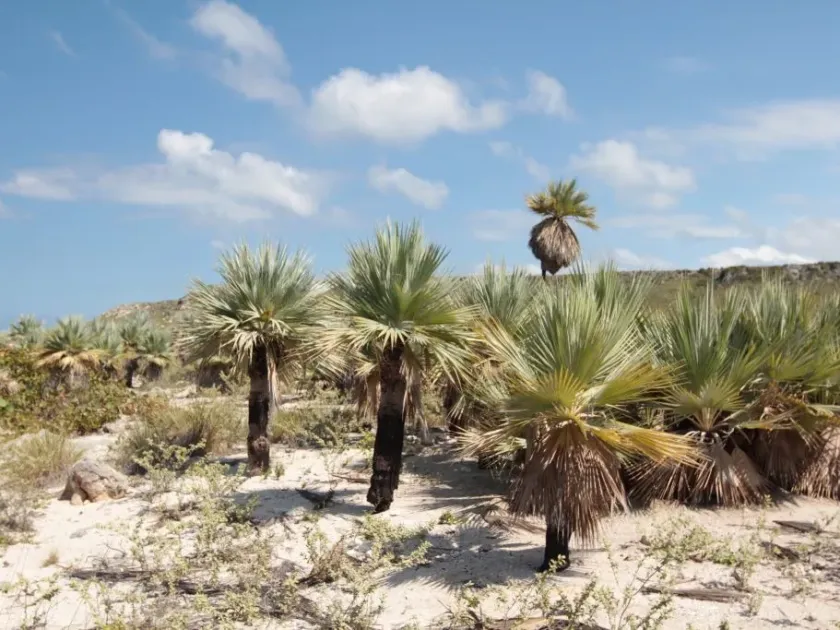
Description
Growing requirements
Copernicia ekmanii is a unique species of fan palm belonging to the Arecaceae family. It is endemic to specific regions of Hispaniola, thriving primarily in dry and limestone-rich terrains.
This palm species requires a tropical climate with a distinct dry season. It is highly adapted to high solar radiation levels, which are essential for the synthesis of the wax on its leaves.
Cultivation success depends on soil conditions; the plant demands excellent drainage and prefers alkaline soils typical of its native habitat. Waterlogging is the primary cause of plant loss in cultivated settings.
Temperature sensitivity is high, as the species cannot tolerate frost or freezing temperatures. It requires a stable, warm environment year-round to support its slow-growth biological rhythm.
Botanically, it is characterized by a sturdy, relatively short trunk and stiff, fan-shaped leaves that are covered in a thick, protective wax layer as an adaptation to arid conditions.
Main diseases and pests
Root rot, induced by fungal pathogens, remains the most significant threat to cultivated palms, usually triggered by improper watering practices or poor drainage systems.
Pests like the palm weevil (Rhynchophorus spp.) pose a critical danger, as their larvae can penetrate the trunk and destroy the core, leading to the rapid decline of the plant.
Environmental stressors, such as prolonged drought coupled with insect infestation, can weaken the plant, making it more susceptible to various leaf-spotting fungi.
Biological monitoring is necessary to prevent the spread of infections. Ensuring adequate spacing between plants promotes better airflow, which reduces the humidity around the foliage.
Integrated pest management strategies are recommended to keep the population healthy, focusing on sanitation and the quick removal of any decaying organic matter from the planting site.
Harvesting
The primary agricultural interest in Copernicia ekmanii is the harvest of its leaf wax, which is similar to the commercially valuable carnauba wax.
Harvesting involves the careful trimming of mature, wax-covered leaves. It is critical to perform this task in a way that protects the apical meristem to ensure the palm continues to thrive.
Once collected, the leaves are dried under the sun, allowing the wax to become brittle. Mechanical threshing or scraping is then used to separate the wax from the leaf fibers.
The palm is also used for artisanal purposes, providing durable fibers for traditional weaving, basketry, and the production of hats by local populations in its native range.
Sustainable harvesting cycles are essential, as the slow growth rate of this palm means that over-harvesting can easily lead to the long-term degradation of the plantation.