
Cuban petticoat palm
Copernicia macroglossa
Description
Growing requirements
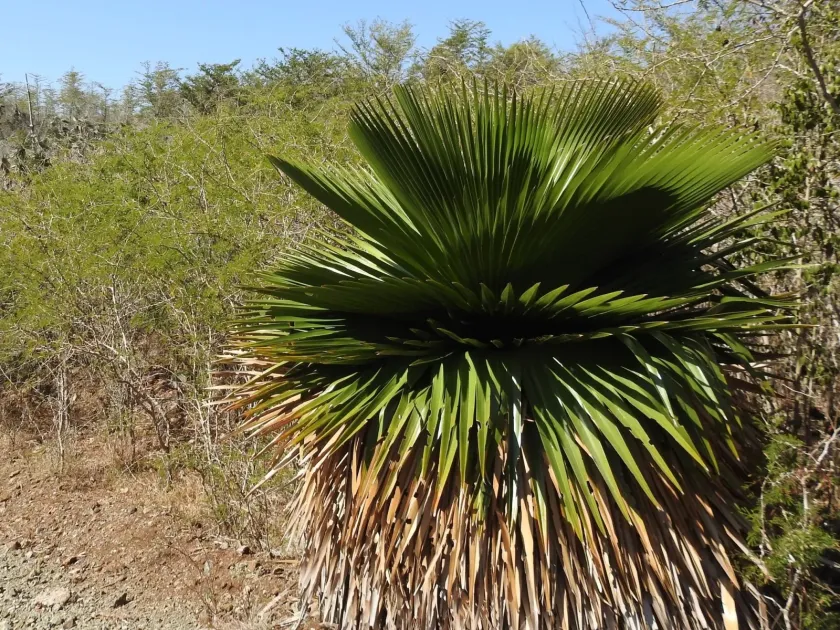
The Cuban petticoat palm (Copernicia macroglossa) belongs to the Arecaceae family and is native to the island of Cuba. This unique palm is highly valued by collectors for its distinct, fan-shaped leaves and its slow growth habit in tropical environments.
To thrive, this species requires a warm tropical climate and full sun exposure. It is sensitive to cold temperatures and must be kept in frost-free zones. In containers, it needs a well-draining, nutrient-rich soil mix to prevent root-related issues.
Watering requirements are specific: while the palm enjoys consistent moisture during the growing season, it is critical to ensure that water does not sit around the roots. Overwatering is the most common mistake made during its cultivation.
In terms of soil, it prefers slightly acidic to neutral substrates. The addition of organic matter provides the necessary nutrients for the development of its rigid, wax-coated foliage, which is the signature trait of this particular species.
The plant's morphology includes a sturdy trunk that typically retains the bases of old leaves. This creates the characteristic 'petticoat' look, where the dead foliage hangs down, covering the upper portion of the trunk in a dense, decorative layer.
Main diseases and pests
The primary threats to Copernicia macroglossa involve fungal infections triggered by excessive humidity or poor soil drainage. Root rot is the most dangerous condition and often proves fatal if not detected in the early stages.
Common pests that target this palm include spider mites and scale insects. These pests feed on the nutrient-rich sap of the leaves. Maintaining proper air circulation and regular inspections are essential to mitigate the risks of infestation in indoor or nursery settings.