
Combretum rotundifolium
Combretum rotundifolium
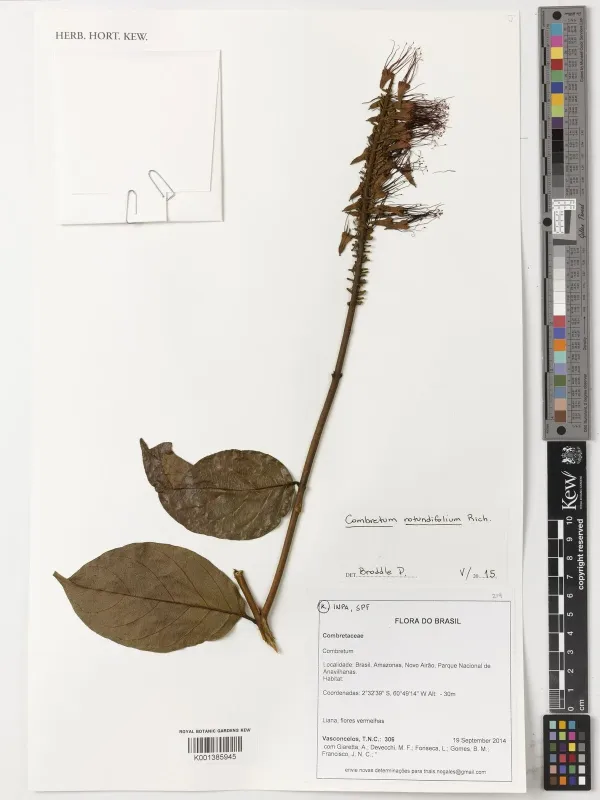
Description
Growing requirements
Combretum rotundifolium is a robust woody vine belonging to the Combretaceae family. Native to the lush tropical regions of South America, this plant is primarily found in the basin areas, thriving under the canopy of dense rainforests.
The plant demands a high-humidity environment and consistent warmth to maintain its physiological functions. It performs best in regions where temperatures remain between 22°C and 28°C throughout the year, as it lacks cold hardiness and is highly sensitive to frost.
Soil requirements for Combretum rotundifolium include a well-draining, nutrient-rich substrate with a slightly acidic to neutral pH. A mix of organic matter and coarse sand is recommended to ensure that moisture is retained without causing waterlogging around the roots.
Botanically, the species is distinguished by its rounded, leathery leaves and striking orange-red, brush-like inflorescences. These flowers are highly adapted to pollination by hummingbirds, which are common in its natural habitat range.
Successful cultivation requires intense but filtered sunlight. In an agricultural or garden setting, the plant should be placed in a location where it receives bright, indirect light, especially during the midday hours to prevent leaf scorching.
Harvesting
The economic value of this species is primarily focused on the ornamental trade. It is a favored choice for vertical landscaping in botanical gardens and luxury tropical resorts, where its rapid growth and showy flowers create a dense screen.
Harvesting for propagation involves collecting seeds from the winged drupes. Since these fruits are wind-dispersed, harvesters must bag the infructescences before full maturity to prevent the loss of genetic material to the wind.
Pruning is an essential maintenance task. It is generally conducted after the flowering cycle to remove dead or tangled stems, which helps manage the vine's rapid spread and encourages the development of more vigorous lateral shoots for the next season.
When producing saplings, nursery growers use softwood cuttings. This process requires a controlled environment with high humidity and misting systems to prevent dehydration while the cuttings establish their initial root systems.
While not a traditional food crop, the plant remains a subject of research in ethnobotany. Its chemical profile, including secondary metabolites in the bark and leaves, continues to be studied for potential applications in botanical medicine and sustainable landscaping.