
Combretum racemosum
Combretum racemosum
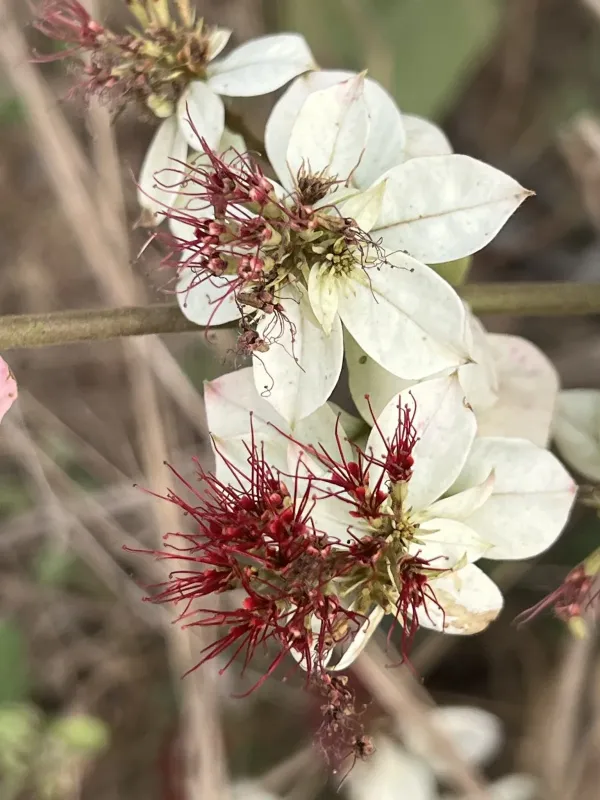
Description
Growing requirements
Combretum racemosum is a robust woody climber belonging to the Combretaceae family. In its native tropical African habitat, this species acts as an aggressive grower, utilizing trees as support structures to reach the sunlight canopy.
The plant originates from the coastal and riparian forests of Western and Central Africa. These environments provide a high-humidity baseline that is crucial for the successful establishment and vegetative growth of the vine.
Climatic requirements are strictly tropical, necessitating consistent temperatures and protection from even minor frost events. It thrives in regions where the thermal regime remains high throughout the entire annual cycle.
Soil composition must be rich in organic matter and possess excellent drainage capabilities to prevent waterlogging. A slightly acidic to neutral soil profile ensures the optimal availability of essential macro and micronutrients.
Light intensity requirements are high for this species. When cultivated, it requires direct exposure to sunlight to support its vigorous growth habit and to trigger the development of its signature raceme-like flower clusters.
Main diseases and pests
Fungal pathogens are the primary threat, especially in areas with stagnant air or poor drainage. Leaf spot diseases are common when humidity levels remain high without sufficient ventilation around the vine foliage.
Insect pests such as mealybugs and spider mites frequently infest young growth. These pests thrive in warm conditions and can quickly sap the plant's vitality, leading to distorted leaves and impaired flower formation.
Root rot represents a significant threat to the survival of Combretum racemosum. Over-watering, particularly when the ambient temperature drops, can suffocate the root system and provide a pathway for soil-borne pathogens.
Integrated pest management strategies should focus on early detection of infestations. Regular monitoring of leaf undersides and the use of insecticidal soaps can significantly reduce the risk of extensive damage.
Sanitary practices, such as removing dead or dying branches, help maintain healthy airflow. Using sterilized pruning equipment is essential to prevent the spread of viral or bacterial infections during maintenance.