
Combretum platypterum
Combretum platypterum
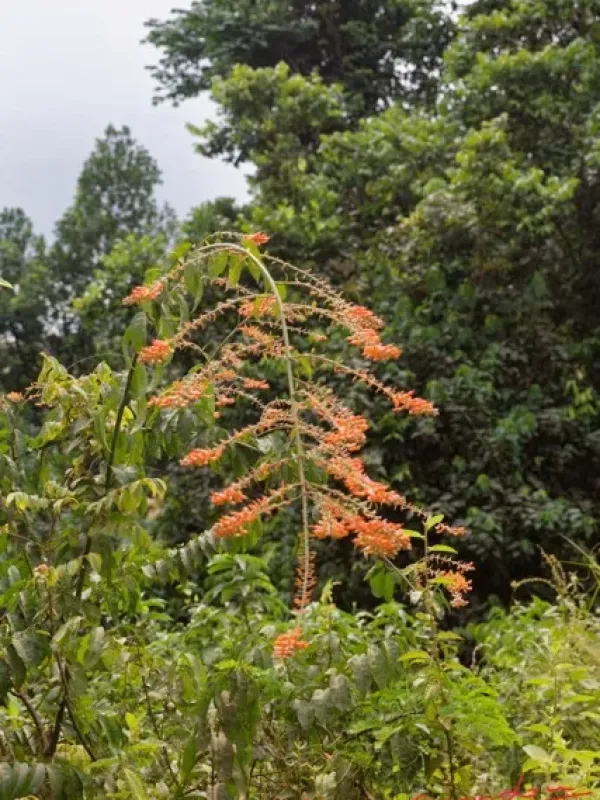
Description
Growing requirements
Combretum platypterum is a perennial woody climber belonging to the Combretaceae family. Native to tropical regions of Western and Central Africa, this species thrives in forest habitats.
For successful cultivation, the plant requires a warm tropical climate with high humidity levels. It performs best under full sun to partial shade conditions, provided that temperatures remain consistently high throughout the year.
The soil requirements focus on fertility and excellent drainage. Organic-rich, slightly acidic soils are ideal for supporting the vigorous growth of this climbing species, which can reach significant dimensions if provided with adequate space.
Agricultural management includes providing robust trellis or support systems to accommodate the plant's natural habit. Consistent watering is essential, especially during the growth phase, while avoiding standing water to prevent root suffocation.
The plant has gained attention for its potential in ethnobotanical applications, specifically for its documented medicinal properties. Furthermore, it serves as a valuable ornamental species for botanical gardens and climate-controlled conservatory environments.
Main diseases and pests
The primary threats to Combretum platypterum include various fungal pathogens that flourish in stagnant, humid environments where air circulation is insufficient.
Insects such as mealybugs and spider mites are typical pests that can cause significant damage to foliage, particularly in confined growing spaces like greenhouses.
Root rot, resulting from over-irrigation or heavy, poorly draining soil, poses a critical threat to the overall health and structural integrity of the vine.
Nutrient deficiencies, specifically related to trace elements, can manifest as interveinal chlorosis, which hinders the photosynthetic efficiency of the plant.
Effective management against these threats relies on rigorous cultural practices, such as pruning for air circulation and careful monitoring for early signs of pest infestation or disease development.