
Combretum paniculatum
Combretum paniculatum
Description
Growing requirements
Combretum paniculatum is a robust woody climbing plant belonging to the Combretaceae family. It is native to the tropical forests and savannah regions of Africa, where it thrives in warm and humid environments.
This plant requires a tropical or subtropical climate to flourish, as it cannot withstand frost or cold temperatures. In non-tropical regions, it is primarily cultivated as an ornamental specimen in greenhouses or controlled climate environments.
The ideal soil for Combretum paniculatum should be fertile, slightly acidic to neutral, and possess excellent drainage properties. Consistent watering is essential, but the root system must be protected from prolonged waterlogging to prevent root decay.
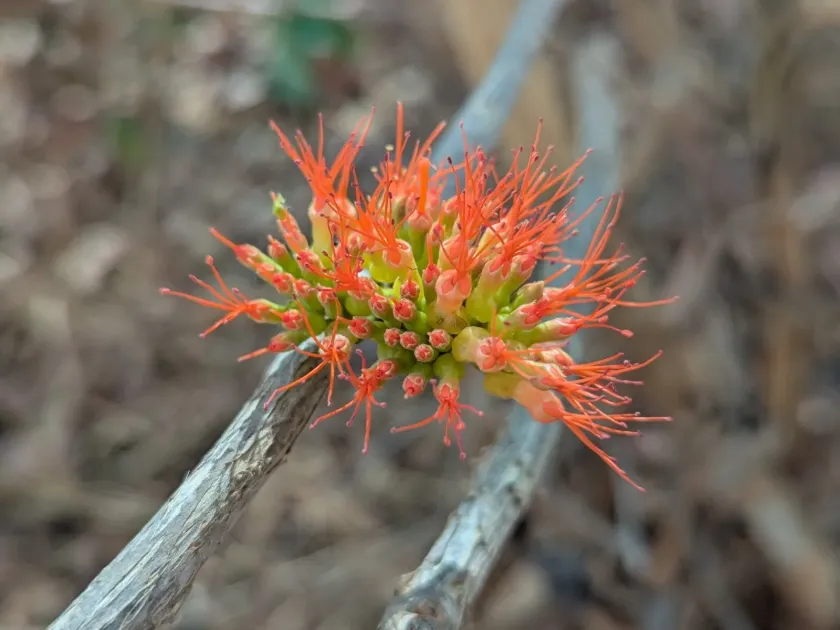
Botanically, the plant is characterized by its dramatic, flame-colored terminal panicles of flowers that attract various pollinators. Its foliage consists of large, coriaceous leaves arranged in an opposite pattern along the vigorous, woody stems.
While primarily valued for its aesthetic appeal in landscape architecture and botanical collections, the plant is also of interest in ethnobotanical studies. Its rapid growth makes it an excellent choice for vertical structures like trellises in tropical conservatories.
Main diseases and pests
Common pests affecting this species under glass include spider mites and scale insects. These pests often proliferate when humidity levels are kept too low, necessitating regular inspection of the underside of the leaves.
Pathogenic threats are usually associated with poor air circulation, which can lead to fungal issues such as powdery mildew. Maintaining adequate spacing and proper greenhouse ventilation is crucial for mitigating the spread of such infections.