
Combretum nioroense
Combretum nioroense
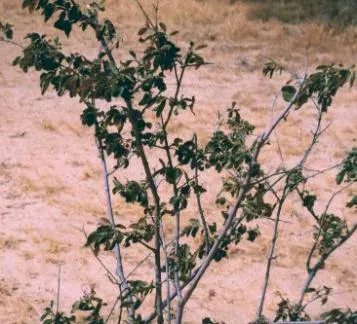
Description
Growing requirements
Combretum nioroense belongs to the Combretaceae family and is widely recognized as a resilient shrub or small tree native to the arid landscapes of West Africa. This species has evolved to thrive in harsh environments, making it a subject of interest for sustainable agricultural projects in dry-land farming.
Regarding soil requirements, the plant demands well-drained, sandy, or stony substrates. It is strictly sensitive to waterlogging, as the root system is highly specialized for absorbing moisture from deep soil layers during sparse rainfall, and excess water in the root zone can trigger decay.
The climate requirements include high thermal indices, with an optimal growth temperature between 25°C and 35°C. Combretum nioroense is highly heliophilous, meaning it requires direct sunlight to achieve its full potential, and it shows significant resistance to high solar radiation levels.
Botanical characteristics feature a sturdy, drought-resistant stem structure and xeromorphic leaves covered with fine hairs. These features act as a natural mechanism to reduce the rate of transpiration, allowing the plant to maintain physiological homeostasis in extreme heat.
Economic and agricultural usage focuses on land rehabilitation and erosion control. By stabilizing the soil structure and providing shade, it facilitates the growth of smaller plants beneath its canopy, contributing to the biodiversity and productivity of the fragile ecosystems where it is cultivated.