
Combretum microphyllum
Combretum microphyllum
Description
Growing requirements
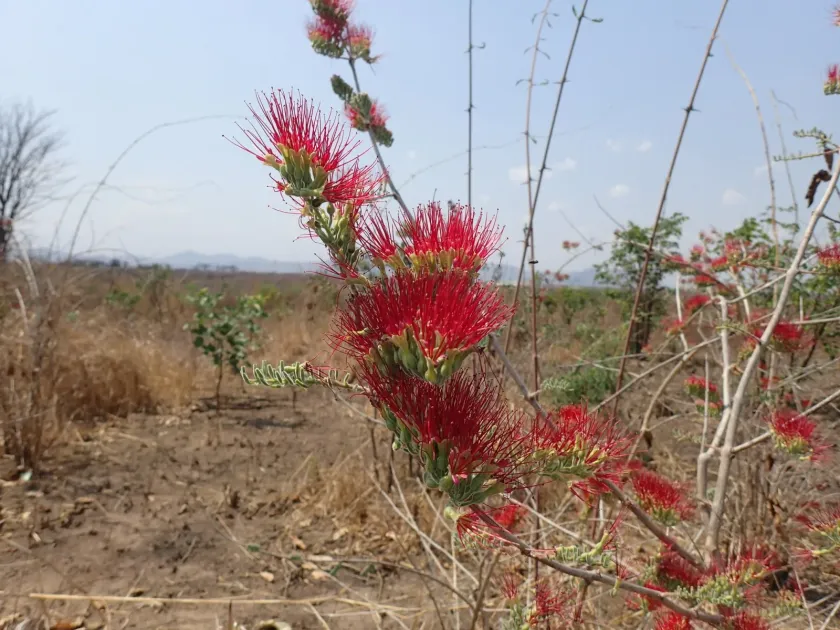
Combretum microphyllum, commonly known as the burning bush, is an attractive woody vine or shrub belonging to the Combretaceae family. It is native to the tropical and subtropical regions of Africa, typically found in bushveld and riverine habitats.
This culture thrives in fertile, well-draining soils with a slightly acidic to neutral pH level. In cultivation, it is essential to ensure adequate soil aeration, as the root system is susceptible to decay if kept in constantly waterlogged conditions.
Regarding climate, the plant requires frost-free environments and high ambient temperatures. It flourishes in full sun, which is critical for its ability to produce its characteristic vibrant red flowers. In colder climates, it must be grown in greenhouses or as a seasonal container plant.
Watering requirements are moderate during the peak growth season, ensuring the soil remains moist but not saturated. During the dormant season, the irrigation frequency should be reduced significantly to prevent root rot and encourage a healthy rest period.
Regular application of a balanced fertilizer is recommended throughout the spring and summer to support the rapid growth of stems and the heavy bloom cycle. Using compost or organic mulch can also help maintain soil temperature and moisture levels.
Main diseases and pests
Common pests include spider mites and mealybugs, which are particularly problematic in greenhouse environments with low humidity. Regular inspection and maintaining optimal air circulation are the most effective non-chemical deterrents.
Root diseases, specifically fungal infections caused by overwatering, are the leading cause of plant decline. These pathogens attack the root hairs, leading to nutrient uptake failures and eventually systemic yellowing of the foliage.
Powdery mildew can affect the leaves if the plant is kept in an area with stagnant air and high humidity. Using systemic fungicides and ensuring proper spacing between plants are standard practices for managing and preventing such outbreaks.
Scale insects can also infest the stems, sucking the sap and weakening the plant's overall health. If discovered, they should be removed manually or treated with horticultural oils to prevent the spread to other parts of the garden.
Maintaining strong plant health through balanced nutrition and avoiding thermal shock from cold drafts will significantly improve the plant's natural resistance to diseases and common environmental stresses.
Harvesting
The primary use of Combretum microphyllum is in ornamental horticulture. Its unique ability to form dense, trailing branches makes it an excellent choice for covering arbors, pergolas, and fences in tropical and warm temperate gardens.
The plant is highly valued for its intense flowering phase, where the bright red bracts create a spectacular display that resembles flames against the green foliage. This aesthetic appeal makes it a popular specimen in botanical gardens.
While not a traditional agricultural crop, professional nurseries produce these plants for the landscaping market, particularly for high-end residential gardens and commercial resort areas that require exotic plant varieties.
Maintenance, often referred to as harvest in a metaphorical sense of garden management, involves routine pruning to maintain the desired shape and size. Pruning also helps remove dead or weak branches, promoting vigorous new growth.
Propagation is generally performed via stem cuttings under high humidity conditions or from seeds collected after they ripen. Success in propagation depends largely on maintaining consistent warmth and soil moisture for the young seedlings.