
Combretum grandiflorum
Combretum grandiflorum
Description
Growing requirements
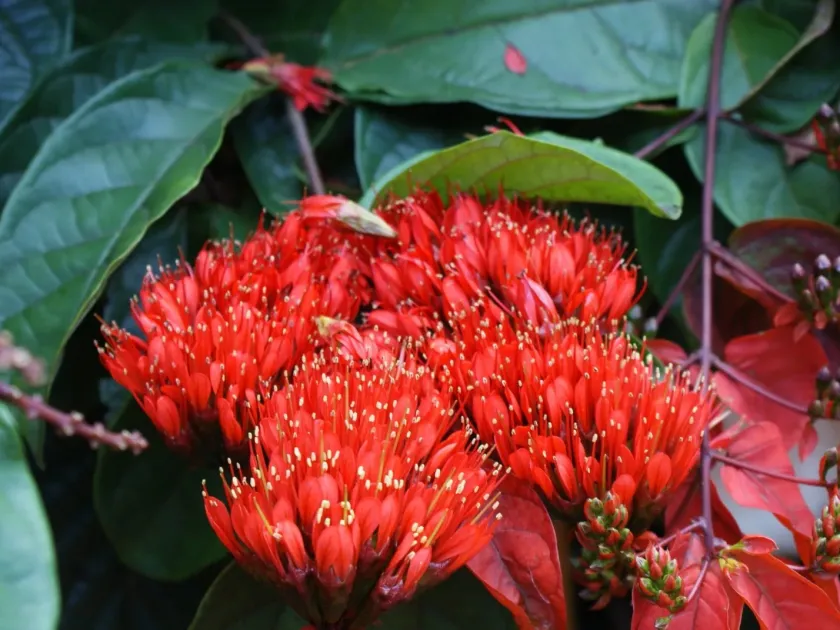
Combretum grandiflorum is a robust, semi-woody climbing plant belonging to the Combretaceae family. Native to West Africa, it is widely appreciated in tropical horticulture for its striking, large, brush-like flowers.
The species thrives in well-draining, fertile soils. While it can adapt to various soil types, it performs best in slightly acidic to neutral substrates enriched with organic matter and excellent aeration.
Regarding climate, this plant requires a tropical environment with consistent warmth. It is highly sensitive to frost, making it suitable only for regions without cold winters or for controlled greenhouse conditions.
Watering requirements involve keeping the soil consistently moist but never waterlogged. During the growing season, regular irrigation is essential to support the rapid development of its sprawling vines.
Maintenance involves structural support and strategic pruning. Because it is a vigorous climber, providing a strong trellis is necessary to manage its growth and enhance its display value in landscapes.
Main diseases and pests
Common pests include spider mites and scale insects, which frequently attack the foliage, especially when the plant is kept in environments with poor air circulation or low ambient humidity.
Fungal diseases, such as leaf spot or powdery mildew, can emerge if the foliage remains wet for prolonged periods or if there is inadequate spacing between plants in a cultivation site.
Root rot represents a significant threat to Combretum grandiflorum. It is primarily caused by over-irrigation or soil compaction that prevents water from draining away from the root zone effectively.
Integrated pest management is recommended, including regular inspections of the underside of leaves to identify pests such as mealybugs before they cause severe damage.
Preventative measures should include proper sanitation of the growing area and ensuring the plant receives enough indirect sunlight to keep the foliage dry after periods of rain or misting.