
Red tussock
Chionochloa rubra
Description
Growing requirements
Red tussock (Chionochloa rubra) is a perennial grass species belonging to the Poaceae family. Native to the alpine and sub-alpine regions of New Zealand, this grass has evolved to thrive in cool, windy, and often exposed environments.
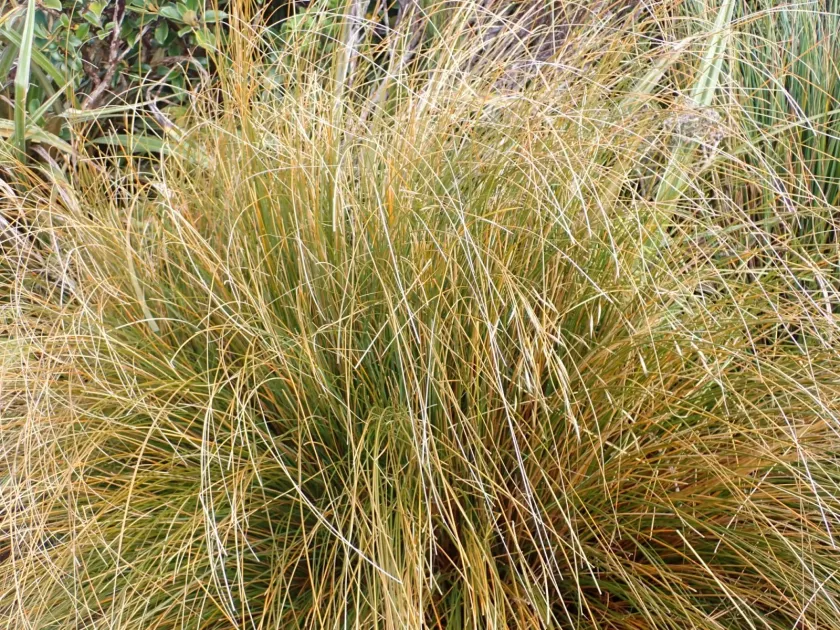
The plant grows in dense, upright tussocks with narrow, cascading leaves that exhibit a unique reddish-brown or bronze hue. This ornamental appearance makes it a popular choice for gardens, especially in large-scale landscaping or as a focal point in rockeries.
The species requires well-draining, slightly acidic soils to perform at its best. It is highly sensitive to waterlogged conditions, which can lead to rapid root rot. Planting on slight slopes or mounds is recommended to improve drainage and air circulation.
Full sun is ideal for Chionochloa rubra, as it brings out the most intense colors in the foliage. While it can handle light shade, insufficient light often results in greener, less vibrant leaves, which diminishes its ornamental appeal.
This grass is remarkably hardy and tolerant of cold, wind, and frost. Once established, it is relatively drought-tolerant and requires minimal maintenance, making it an excellent sustainable option for low-intervention landscaping projects.
Main diseases and pests
Root rot caused by poor soil drainage is the most significant threat to the health of Red tussock. It is essential to ensure the planting site allows water to drain away quickly, especially during wet autumn and winter months.
Fungal diseases, particularly rust, can develop if air circulation around the tussock is poor. Keeping the plant free from debris and ensuring enough space between adjacent plants helps to prevent these common ornamental grass issues.
Although generally pest-resistant, aphids can occasionally infest the young growth in early spring. Regular monitoring is advised, and infestations can usually be managed with simple horticultural soaps or by manually removing affected areas.
Improper pruning techniques can damage the crown of the plant. It is best to remove only dead leaves by gently combing them out in late winter or early spring rather than using heavy mechanical equipment that could harm the living foliage.
Nutrient deficiency is rarely an issue for this species, as it is adapted to low-fertility soils. Excessive use of fertilizers should be strictly avoided, as it encourages soft, succulent growth that is more prone to environmental damage and pests.