
Chionochloa rigida
Chionochloa rigida
Description
Growing requirements
Chionochloa rigida, commonly known as New Zealand mountain tussock, is a perennial grass belonging to the Poaceae family. This species is endemic to the South Island of New Zealand, where it forms extensive alpine and subalpine grasslands, playing a crucial role in maintaining soil stability in montane ecosystems.
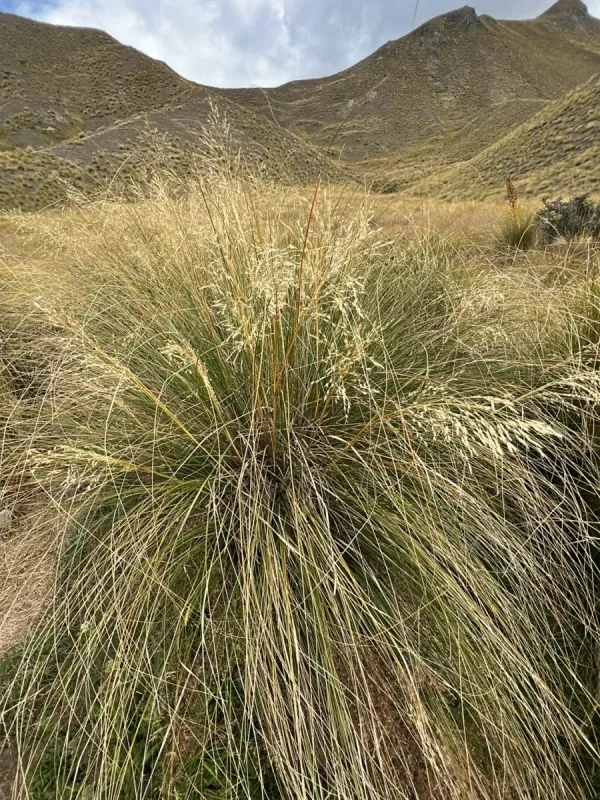
Botanically, the plant is characterized by large, densely tufted growth forms with rigid, leathery leaves that can grow up to 60–90 cm in height. These leaves are covered in fine hairs and are specially adapted to withstand extreme wind exposure and fluctuating alpine temperatures, reflecting its evolution in harsh environments.
Regarding growth requirements, Chionochloa rigida thrives in well-drained, nutrient-poor, slightly acidic soils. It is highly intolerant of waterlogged conditions, making adequate drainage a mandatory component of its cultivation. It prefers full sun exposure to maintain its structural integrity and distinct golden-green coloration.
In horticultural practice, this species is widely utilized for its striking architectural form. It serves as an excellent structural plant in rock gardens, gravel beds, or as a focal point in native-style landscapes. Its year-round presence and ability to persist through snow cover make it highly valued by landscape designers.
General maintenance involves minimal intervention, primarily focusing on removing accumulated dead foliage during the early spring to promote healthy new growth. Fertilization is generally unnecessary and potentially harmful, as the plant is specifically adapted to survive in low-fertility substrates.
Main diseases and pests
The primary threat to the health of Chionochloa rigida is root decay caused by poor soil drainage and stagnant moisture around the crown. Additionally, in cultivation, overly humid environments can facilitate the spread of fungal leaf pathogens if airflow is insufficient.
In terms of pests, it is relatively resistant but may occasionally be prone to attacks from spider mites in confined or poorly ventilated conditions. Monitoring for physical damage to the root system by soil-dwelling larvae is also recommended during the establishment phase of the plant.