
Chionochloa oreophila
Chionochloa oreophila
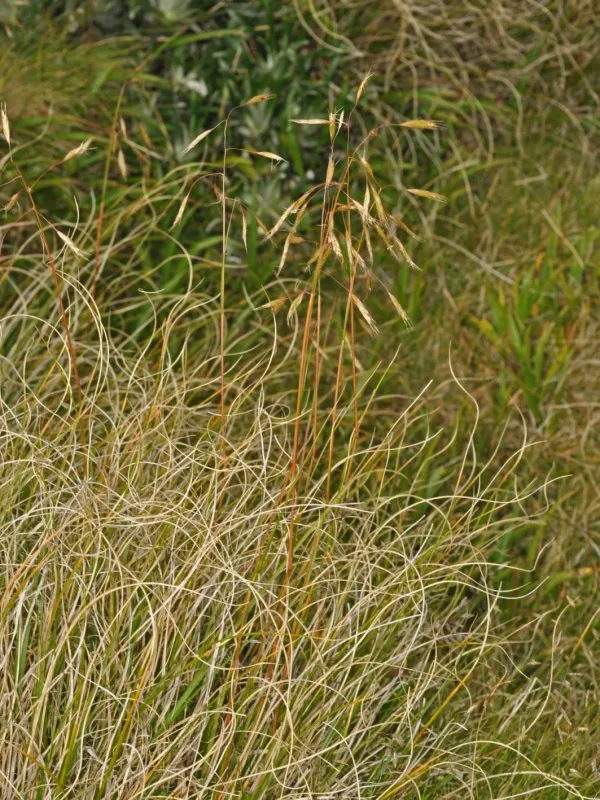
Description
Growing requirements
Chionochloa oreophila is a perennial grass belonging to the Poaceae family. This species is native to the high-altitude alpine and subalpine meadows of New Zealand's South Island, where it is specialized for survival in harsh mountain environments.
The plant has strict climate requirements, favoring cool, moist conditions with high air humidity. It is inherently unsuited for hot or arid climates, necessitating precise environmental control when cultivated outside its natural mountain range.
Soil requirements are quite specific: it thrives in well-drained, acidic, and nutrient-poor substrates. The plant is highly sensitive to waterlogging, and excessive soil fertility can inhibit its natural growth patterns, making standard fertilization unsuitable.
The agrotechnical management of this crop is characterized by slow growth rates. Propagation typically requires seed stratification to simulate alpine winter conditions, and young plants demand careful handling to prevent root shock.
Economically, its use is primarily decorative, catering to specialized landscape design for rock gardens and botanical collections. It is valued for its unique morphology and its ability to withstand cold temperatures that would kill most garden plants.
Main diseases and pests
Root rot is the most significant threat to Chionochloa oreophila, typically induced by poor drainage and excessive moisture during the warmer months of the year, which causes rapid decay of the root system.
In indoor or greenhouse environments, pests such as aphids and spider mites can become problematic. These pests thrive in stagnant air, which is common in environments that attempt to replicate the cooling needs of the plant.
Direct exposure to intense midday sunlight poses a high risk of leaf burn, which weakens the plant and decreases its resilience to secondary bacterial or fungal infections.
Invasive weeds present a major competition issue. Because the species grows so slowly, any aggressive vegetation in the immediate vicinity can easily overtake and suppress the growth of the alpine grass.
Poorly balanced soil pH and improper mineral content can lead to metabolic imbalances, manifesting as chlorosis and eventual necrosis of the foliage, requiring immediate soil analysis and corrective action.