
Chionochloa flavescens
Chionochloa flavescens
Description
Growing requirements
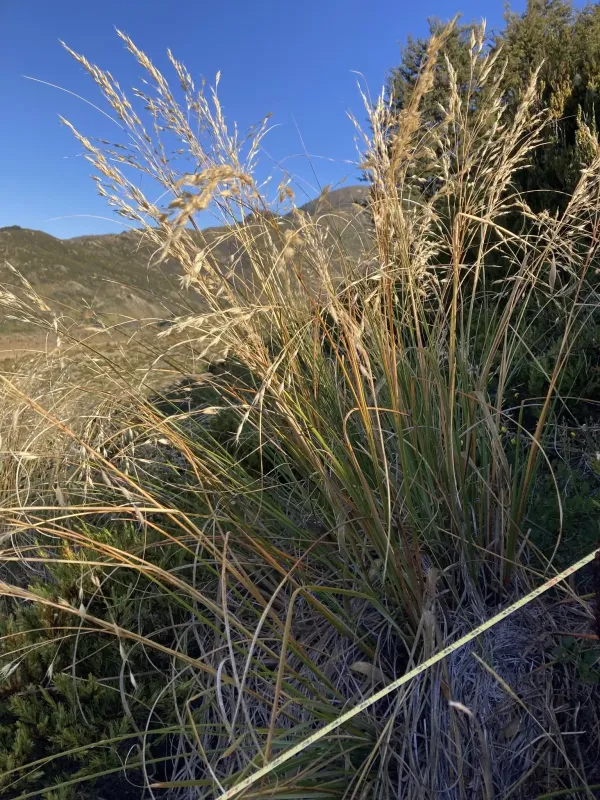
Chionochloa flavescens, known as the broad-leaved snow tussock, belongs to the Poaceae family. Originating from the alpine and subalpine zones of New Zealand, this species is highly valued for its striking, arching foliage that forms a dense, golden-green clump.
The plant thrives in cool, temperate environments with high humidity. It struggles in regions with extreme summer heat, which can lead to stress and decline. Ideally, it should be planted in areas with partial shade or where it can receive cool breeze protection during the hottest part of the day.
Regarding soil requirements, Chionochloa flavescens demands excellent drainage. It performs best in acidic or neutral, stony soils that mimic its natural mountain habitat. Heavy soils that retain too much water are unsuitable and can lead to immediate root issues.
Agrotechnical maintenance involves consistent but moderate watering. While the plant likes moisture, it does not tolerate waterlogging. Ensuring good air circulation around the crown is essential to keep the foliage healthy and prevent internal decay.
This grass is primarily used for ornamental purposes in landscape architecture. It is an excellent choice for rock gardens, container planting, and massing in naturalistic garden designs, providing texture and movement to the landscape throughout the seasons.
Main diseases and pests
The primary threat to the health of this species is root rot caused by stagnant water in the root zone. Proper soil drainage is the most effective preventative measure against this often fatal condition.
Fungal issues, including powdery mildew, can occur when plants are crowded or when airflow is severely restricted. Maintaining proper spacing and removing debris from the base of the plant are critical cultural practices for disease prevention.
Pests such as slugs and snails are a common problem for this tussock grass, especially in moist garden conditions. These pests feed on the tender blades, causing unsightly damage. Physical barriers like gravel mulch are recommended to deter them.
Aphids can occasionally infest the young growth during spring. Early detection via regular monitoring is recommended to control populations before they cause significant damage to the plant structure.
Effective pest and disease management for Chionochloa flavescens is based on environmental optimization. By placing the plant in a location that mirrors its native climatic needs, growers can minimize the reliance on chemical pesticides and fungicides.