
Snow tussock grass
Chionochloa pallens
Description
Growing requirements
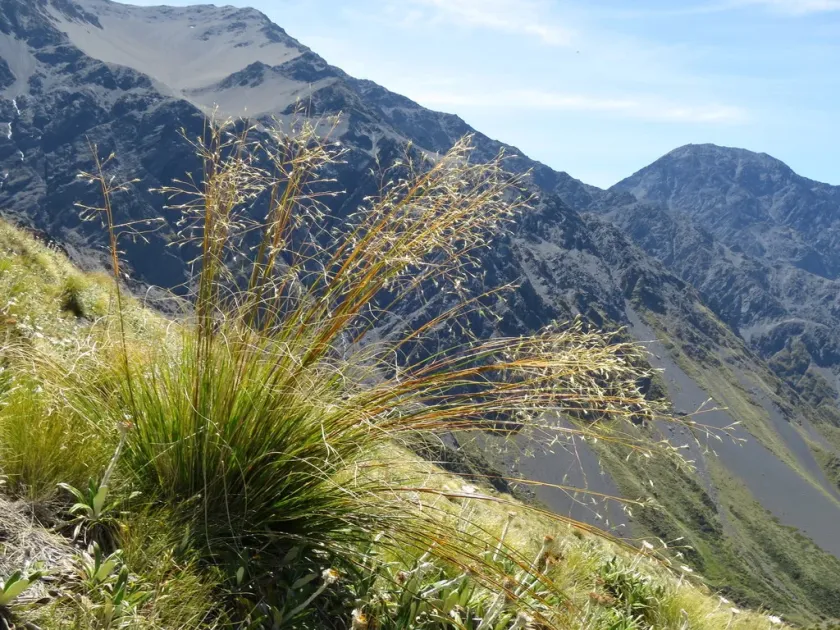
Chionochloa pallens, commonly known as snow tussock grass, is a perennial grass species belonging to the Poaceae family. It is native to the South Island of New Zealand, where it thrives in subalpine and alpine grasslands.
The plant is characterized by its dense, tussock-forming habit, growing up to one meter in height. Its leaves are stiff and yellowish-green, adapted to tolerate harsh climatic conditions and high solar radiation.
The cultivation of this species requires a cool, temperate climate. It is highly adapted to high-altitude environments, meaning it prefers cooler summers and does not tolerate long periods of intense, sweltering heat.
Regarding soil, the plant strictly requires excellent drainage. In its natural habitat, it grows in rocky, well-aerated substrates. In garden settings, it is essential to avoid heavy clay soils that can lead to root asphyxiation and rot.
It is primarily valued in ornamental horticulture for its architectural structure. It works exceptionally well in rock gardens, gravel beds, or as a textured accent plant in modern landscape design.
Main diseases and pests
Root rot caused by poor soil drainage is the most significant threat to the health and longevity of Chionochloa pallens in garden environments.
Excessive humidity combined with low airflow can lead to fungal infections on the foliage, which are difficult to treat once established.
While relatively pest-resistant, the plant can occasionally suffer from infestations of spider mites or aphids if it is grown in stressed conditions.
Competition from aggressive, invasive weeds can stunt the growth of young tussocks, requiring diligent maintenance of the surrounding soil surface.
Regular monitoring for environmental stress is crucial; excessive nitrogen fertilization should also be avoided to maintain a natural, compact growth form.